3-acetylthiopropanoyl-L-proline-t-butyl ester → 1-(3-Acetylthiopropanoyl)-L-proline
Reaction equation

C([O:5][C:6](=[O:20])[C@@H:7]1[CH2:11][CH2:10][CH2:9][N:8]1[C:12](=[O:19])[CH2:13][CH2:14][S:15][C:16](=[O:18])[CH3:17])(C)(C)C>C1(OC)C=CC=CC=1.FC(F)(F)C(O)=O>[C:16]([S:15][CH2:14][CH2:13][C:12]([N:8]1[CH2:9][CH2:10][CH2:11][C@H:7]1[C:6]([OH:20])=[O:5])=[O:19])(=[O:18])[CH3:17]Participants
4
Reactant 1

Product 1

Reagents, catalysts & solvents 2

Procedure
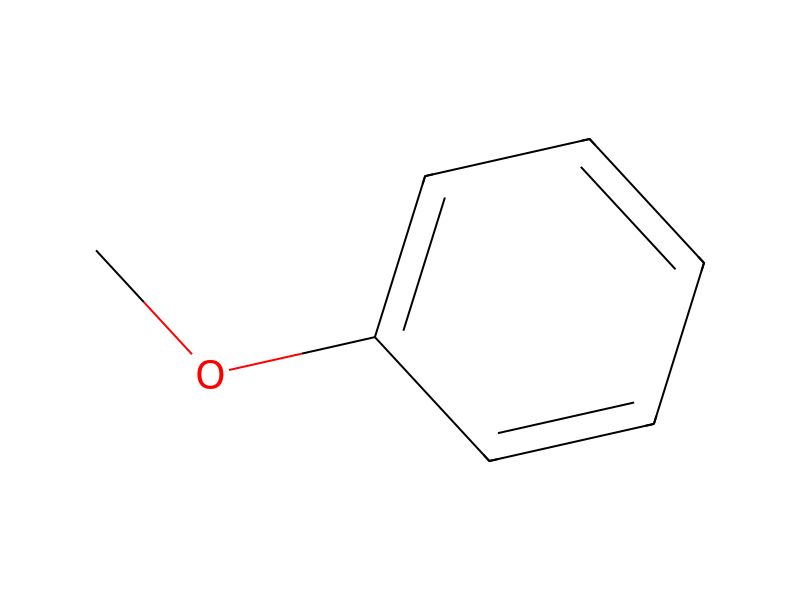
1-(3-Acetylthiopropanoyl)-L-proline-t-butyl ester (4.7 g.) is dissolved in a mixture of anisole (34 ml.) and trifluoroacetic acid (68 ml.) and the mixture is kept at room temperature for one hour. The solvents are removed in vacuo and the residue is precipitated from ether-hexane several times. The residue (3.5 g.) is dissolved in acetonitrile (25 ml.) and dicyclohexylamine (2.8 ml.) is added. The crystalline salt is filtered and recrystallized from isopropanol. Yield 3.8 g.. m.p. 176°-177°. The salt is reconverted to 1-(3-acetylthiopropanoyl)-L-proline as in Example 1, yield 1.25 g., m.p. 89°-90° (ethyl acetate-hexane).
Workup
- customThe solvents are removed in vacuo
- customthe residue is precipitated from ether-hexane several times
- dissolutionThe residue (3.5 g.) is dissolved in acetonitrile (25 ml.)
- additiondicyclohexylamine (2.8 ml.) is added
- filtrationThe crystalline salt is filtered
- customrecrystallized from isopropanol
Sources & evidence
- ORD record
- ord-72526ffb7fd945f8887c2fc703877777
- Source dataset
- uspto-grants-1979_05
- Patent number
- US04154840
Reaction notes
Loading…