Furan → Furfural
Reaction equation
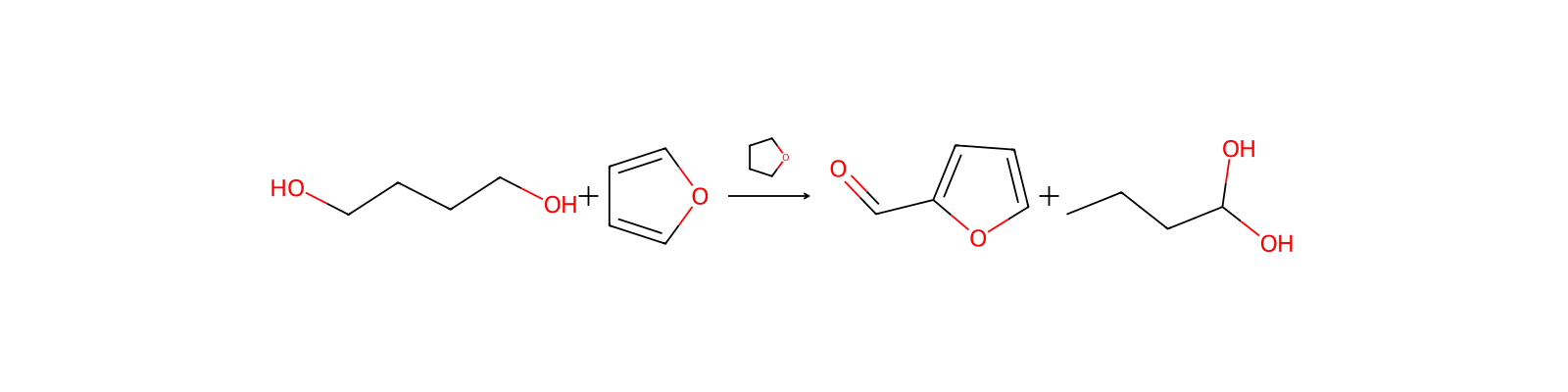
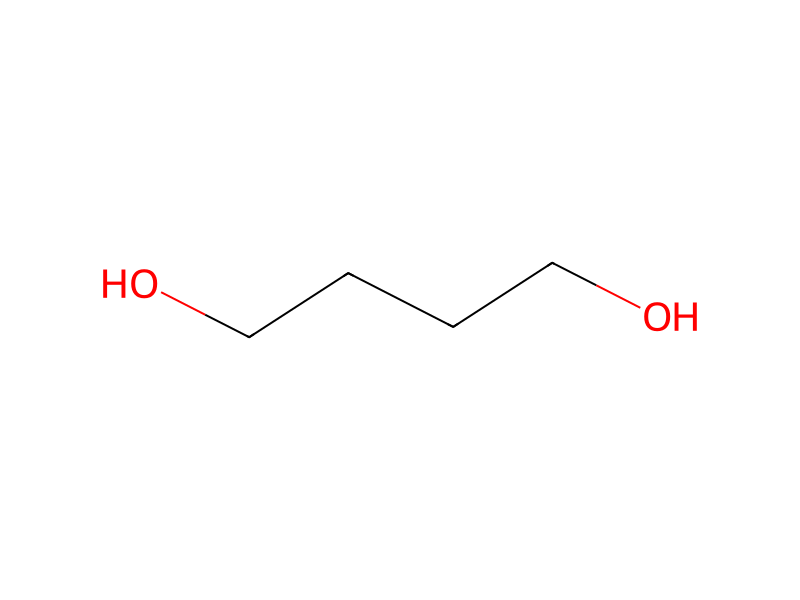
[CH2:1]([OH:6])[CH2:2][CH2:3][CH2:4][OH:5].[O:7]1[CH:11]=[CH:10][CH:9]=[CH:8]1>O1CCCC1>[CH:8](=[O:7])[C:4]1[O:6][CH:1]=[CH:2][CH:3]=1.[CH:11]([OH:7])([OH:5])[CH2:10][CH2:9][CH3:8]Participants
5
Reactant 2

Product 2


Reagents, catalysts & solvents 1

Procedure
Both 1,4-butanediol and tetrahydrofuran are useful as a solvent and raw materials for organic synthesis such as polymeric material. They have been produced through various ways. For example, tetrahydrofuran is produced by (a) catalytic hydrogenation of furan which has been obtained by elimination of carbonyl group from furfural, (b) dehydration cyclization of butanediol obtained by hydrogenation of butynediol which is a reaction product of acetylene and formaldehyde and (c) reaction of 1,4-diacetoxybutanediol and water in the presence of an acid catalyst; and 1,4-butanediol is produced by (d) hydrogenation of butynediol and (e) hydrolysis of 1,4-diacetoxybutane.
Workup
- customraw materials for organic synthesis such as polymeric material
- customThey have been produced through various ways
Sources & evidence
- ORD record
- ord-97ecbe320e404a16960dbd08d8135f96
- Source dataset
- uspto-grants-1979_05
- Patent number
- US04156685
Reaction notes
Loading…