2-Methylindole → 3-(4-Chloro-3-methylsulfamoylbenzoyl)-2-methylindole
Reaktionsgleichung
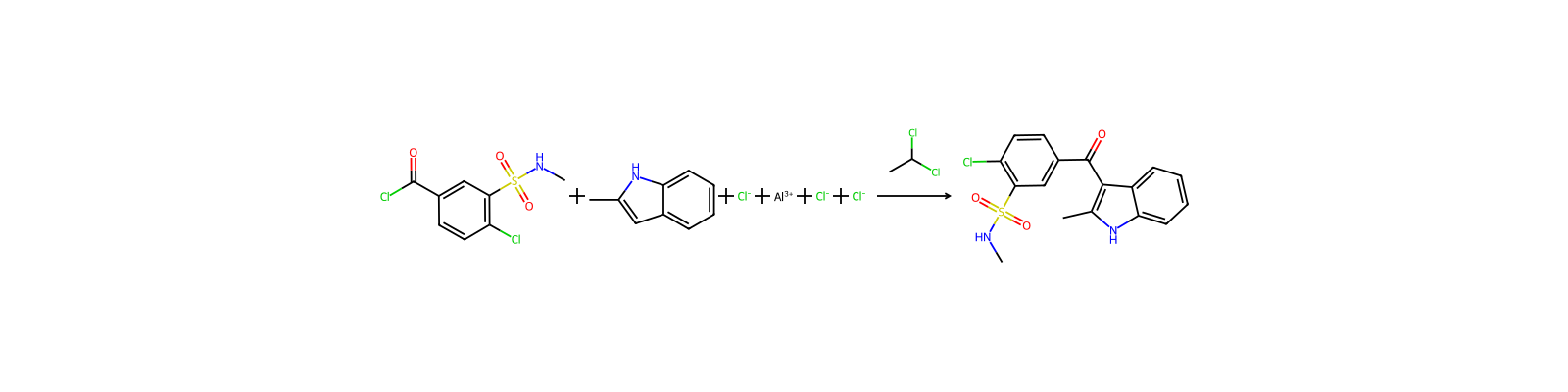
[Cl:1][C:2]1[CH:10]=[CH:9][C:5]([C:6](Cl)=[O:7])=[CH:4][C:3]=1[S:11](=[O:15])(=[O:14])[NH:12][CH3:13].[CH3:16][C:17]1[NH:18][C:19]2[C:24]([CH:25]=1)=[CH:23][CH:22]=[CH:21][CH:20]=2.[Cl-].[Al+3].[Cl-].[Cl-]>ClC(Cl)C>[Cl:1][C:2]1[CH:10]=[CH:9][C:5]([C:6]([C:25]2[C:24]3[C:19](=[CH:20][CH:21]=[CH:22][CH:23]=3)[NH:18][C:17]=2[CH3:16])=[O:7])=[CH:4][C:3]=1[S:11](=[O:15])(=[O:14])[NH:12][CH3:13]Komponenten
5
Edukt 3
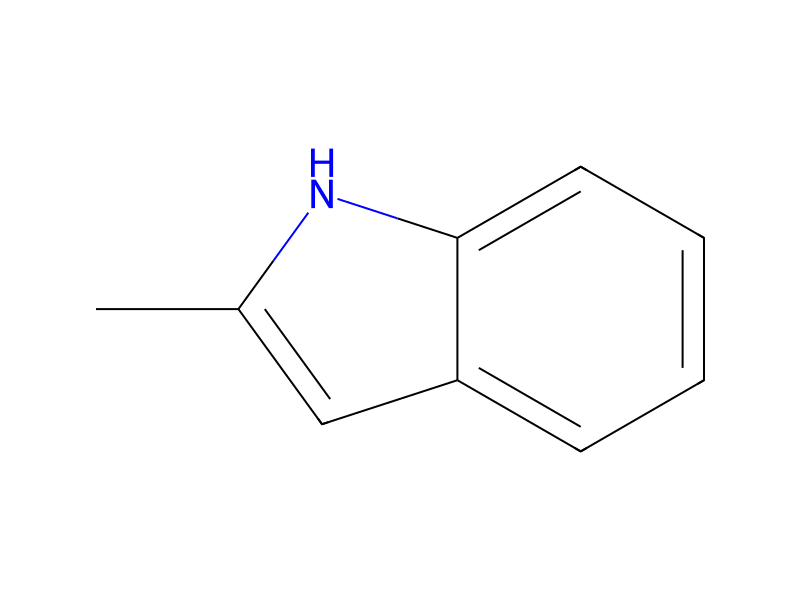


Produkt 1

Reagenzien, Katalysatoren, Lösungsmittel 1

Versuchsvorschrift
is obtained as described in Example 10 a) from 2.68 g 4-chloro-3-methylsulfamoylbenzoyl chloride and 1.3 g 2-methylindole in the presence of 2.7 g aluminum chloride in dichloroethane. Colorless crystals, m.p. 246° C.
Aufarbeitung
- customis obtained
Quellen und Nachweise
- ORD-Eintrag
- ord-856f65f79d224de5b597eeed591581c6
- Quelldatensatz
- uspto-grants-1979_05
- Patentnummer
- US04156732
Notizen zur Reaktion
Wird geladen…