8-Hydroxyquinoline → 8-Hydroxyquinoline N-oxide
Reaction equation

[OH:1][C:2]1[CH:3]=[CH:4][CH:5]=[C:6]2[C:11]=1[N:10]=[CH:9][CH:8]=[CH:7]2.ClC1C=CC=C(C(OO)=[O:20])C=1.C(=O)(O)[O-].[Na+]>ClCCl>[OH:1][C:2]1[CH:3]=[CH:4][CH:5]=[C:6]2[C:11]=1[N+:10]([O-:20])=[CH:9][CH:8]=[CH:7]2Participants
5
Reactant 3
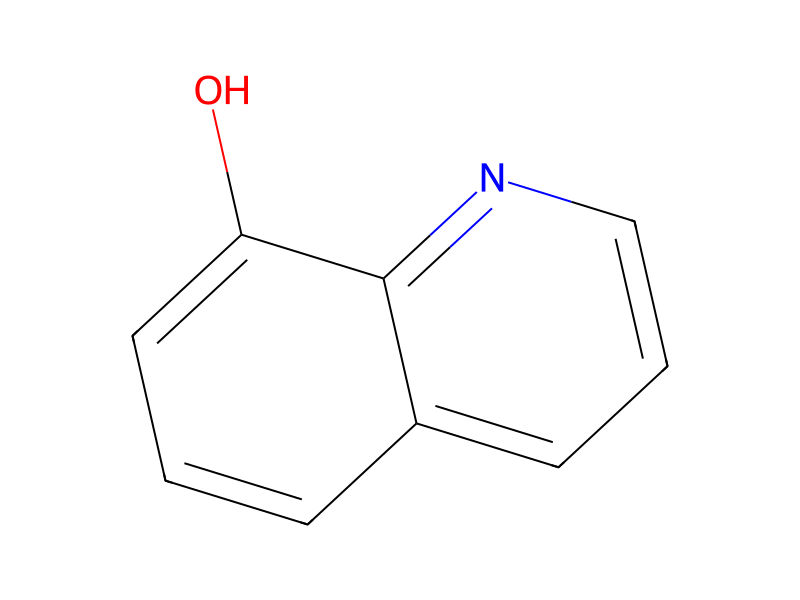


Product 1

Reagents, catalysts & solvents 1

Procedure
To a solution of 8-hydroxyquinoline (1.45 g, 10 mmol) in dichloromethane (50 ml) was added 3-chloroperbenzoic acid (MCPBA) (1.24 g, 13 mmol). The mixture was stirred at room temperature for 10 min, poured into 1.0N sodium bicarbonate (100 ml), and then extracted with dichloromethane (3×50 ml). The extract was washed with water, dried over magnesium sulfate, and evaporated to give a brown solid which was crystallized from dichloromethane and diethyl ether affording 8-Hydroxyquinoline 1-oxide (5a) (1.34 g, 83%) as yellow needle crystals. mp: 132°-133° C.; 1H-NMR (CDCl3): δ7.04-8.28 (m, 6H, Ar--H), 15.02 (br s, 1H, OH).
Workup
- extractionextracted with dichloromethane (3×50 ml)
- washThe extract was washed with water
- dry with materialdried over magnesium sulfate
- customevaporated
- customto give a brown solid which
- customwas crystallized from dichloromethane and diethyl ether
Sources & evidence
- ORD record
- ord-d3827eabc9ee43c7b0f32b2abf17d839
- Source dataset
- uspto-grants-1997_07
- Patent number
- US05646164
Reaction notes
Loading…