Acetone → Acetone diisobutylhydrazone
Reaction equation

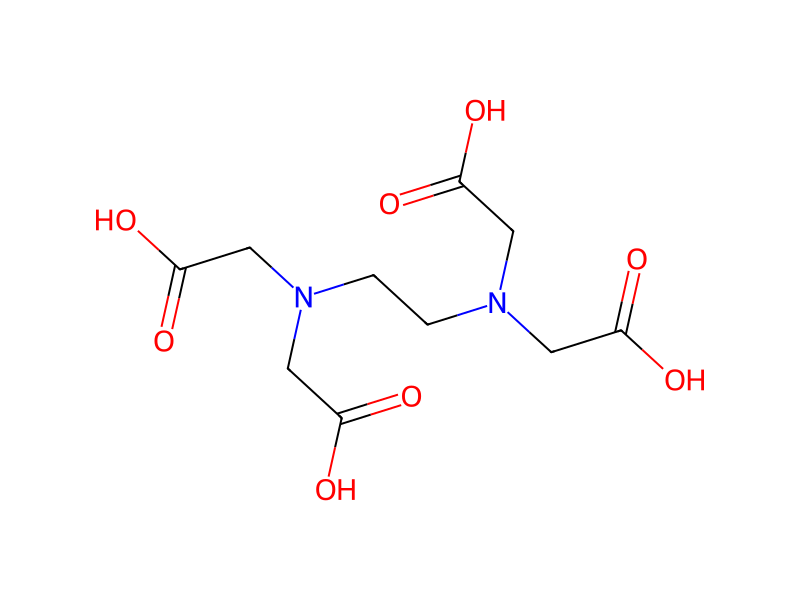
[CH2:1]([NH:5][CH2:6][CH:7]([CH3:9])[CH3:8])[CH:2]([CH3:4])[CH3:3].N.[CH3:11][C:12]([CH3:14])=O.C(#[N:17])C.OO>[Na][Na].C(N(CC(O)=O)CC(O)=O)CN(CC(O)=O)CC(O)=O.C([O-])(=O)C.[NH4+].O.CO>[CH2:1]([N:5]([CH2:6][CH:7]([CH3:9])[CH3:8])[N:17]=[C:12]([CH3:14])[CH3:11])[CH:2]([CH3:4])[CH3:3]Participants
11
Reactant 5





Product 1

Reagents, catalysts & solvents 5




Procedure
A solution was prepared which comprised 206 g diisobutylamine (1.60 mole), 36 g an aqueous solution containing 19.1% by weight NH3 (0.40 mole), 92.6 g acetone (1.60 mole), 41 g acetonitrile (1.00 mole), and 96 g metanol, in which 2.4 g of the disodium salt of ethylenediaminetetracetic acid and 0.4 g ammonium acetate were dissolved. The solution was brought to 50° C, and within the space of half an hour 38.9 g oxygenated water containing 70% by weight H2O2 (0.80 mole) were introduced. The reaction was allowed to continue for seven hours at the same temperature; and the solution was then distilled at 90° C and 20 mm Hg to obtain 26 g acetone N, N-diisobutylhydrazone (0.14 mole, which was 17.5% of the theoretical yield).
Workup
- customwas brought to 50° C
- additionwere introduced
- distillationand the solution was then distilled at 90° C
Sources & evidence
- ORD record
- ord-23c5306e62344caebcc2dbb8390d9117
- Source dataset
- uspto-grants-1976_03
- Patent number
- US03943132
Reaction notes
Loading…