Thionyl Chloride → HCID 20368183, compound
Reaction equation

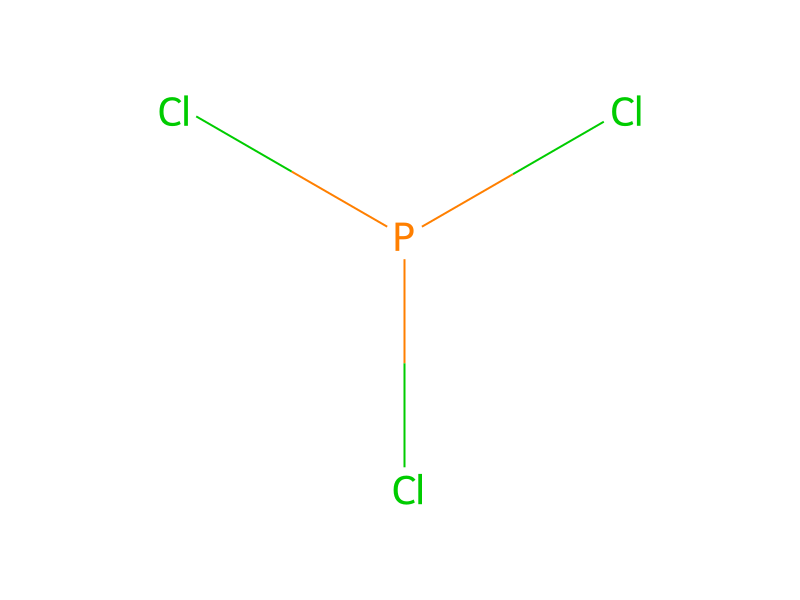
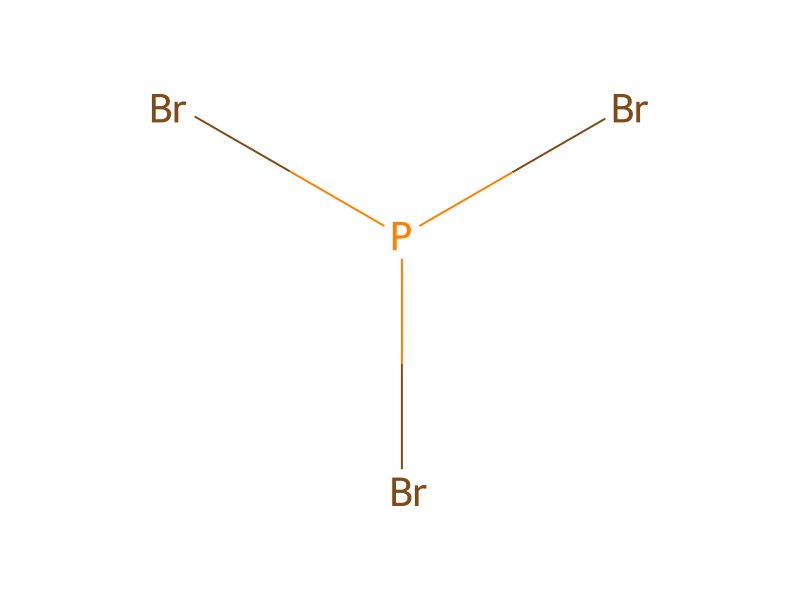
P(Cl)(Cl)Cl.P(Br)(Br)Br.P(F)(F)F.S(Cl)([Cl:15])=O.[NH2:17][C:18]1[N:22]([CH2:23][CH2:24]O)[N:21]=[C:20]([C:26]2[N:27]([CH3:34])[C:28]([N+:31]([O-:33])=[O:32])=[CH:29][N:30]=2)[C:19]=1[C:35]#[N:36]>CN(C)C=O.C1C=CC=CC=1>[NH2:17][C:18]1[N:22]([CH2:23][CH2:24][Cl:15])[N:21]=[C:20]([C:26]2[N:27]([CH3:34])[C:28]([N+:31]([O-:33])=[O:32])=[CH:29][N:30]=2)[C:19]=1[C:35]#[N:36]Participants
8
Reactant 5



Product 1

Reagents, catalysts & solvents 2


Procedure
The preparation of a 5-amino-1-(haloalkyl)-3-(1-methyl-5-nitro-2-imidazolyl)pyrazole-4-carbonitrile is accomplished by reacting the corresponding hydroxy-alkyl compound with a halogenating agent such as phosphorus trichloride, phosphorus tribromide, phosphorus trifluoride, thionyl chloride and the like. Thus, 5-amino-1-(β-hydroxyethyl)-3-(1-methyl-5-nitro-2-imidazolyl)pyrazole-4-carbonitrile, is allowed to react with thionyl chloride in an inert solvent, such as benzene, in the presence of a small amount of dimethyl-formamide to yield 5-amino-1-(β-chloroethyl)-3-(1-methyl-5-nitro-2-imidazolyl)pyrazole-4-carbonitrile.
Sources & evidence
- ORD record
- ord-1299efd732fa4175a0c4621f83e86606
- Source dataset
- uspto-grants-1976_03
- Patent number
- US03947467
Reaction notes
Loading…