4-Toluenesulfonyl chloride → 1-tosyl-3-acetylpyrrole
Reaction equation

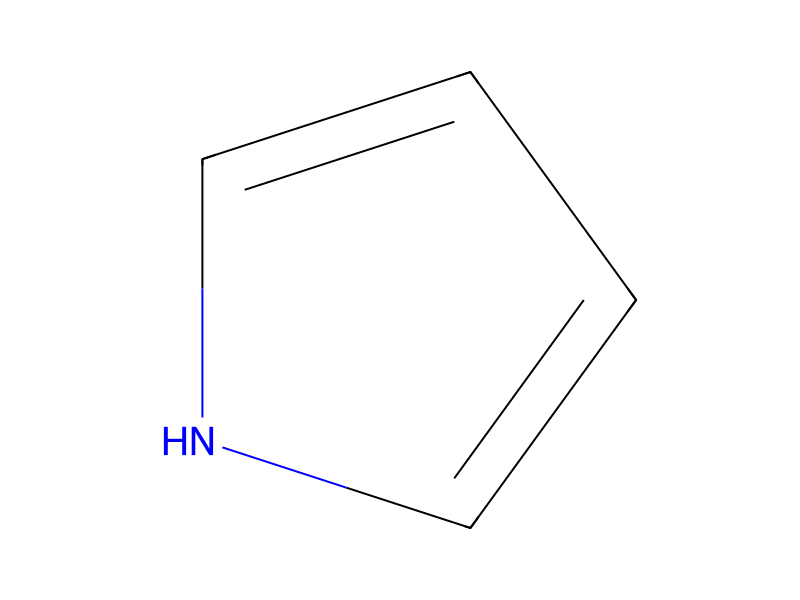
[NH:1]1[CH:5]=[CH:4][CH:3]=[CH:2]1.[S:6](Cl)([C:9]1[CH:15]=[CH:14][C:12]([CH3:13])=[CH:11][CH:10]=1)(=[O:8])=[O:7].[CH3:17][C:18](C)([O-:20])C.[K+].C(OC(=O)C)(=O)C>>[S:6]([N:1]1[CH:5]=[CH:4][C:3]([C:18](=[O:20])[CH3:17])=[CH:2]1)([C:9]1[CH:15]=[CH:14][C:12]([CH3:13])=[CH:11][CH:10]=1)(=[O:8])=[O:7]Participants




Procedure
The synthesis of 1-(N-tosyl)-3-(hydroxyethyl)pyrrole was carried out as described by Korri-Youssoufi et al., Materials Science and Engineering C15 (2001) 265-268. In a first step, 1-(N-tosyl) pyrrole was synthesized from pyrrole using tosyl chloride in the presence of a strong base, potassium tert-butoxide. Next, acylation of the 1-(N-tosyl)pyrrole with acetic anhydride made it possible to obtain 1-tosyl-3-acetylpyrrole, which was converted to methyl 2-[3-(1-N-tosylpyrrole)]acetate by oxidative transposition, using thallium nitrate in the presence of montmorillonite. Reduction under mild conditions with borane dimethyl sulfide gave the desired product, 1-(N-tosyl)-3-(hydroxyethyl)pyrrole. The overall yield of the reaction was 21.8%.
Sources & evidence
- ORD record
- ord-1c25ad3806c945b2ae34eac9459dd328
- Source dataset
- uspto-grants-2008_11
- Patent number
- US07446186B2
Reaction notes
Loading…