Hydrochloric Acid → 4,6-Dichloro-2-methyl-2,3-dihydro-1H-inden-1-one
Reaction equation

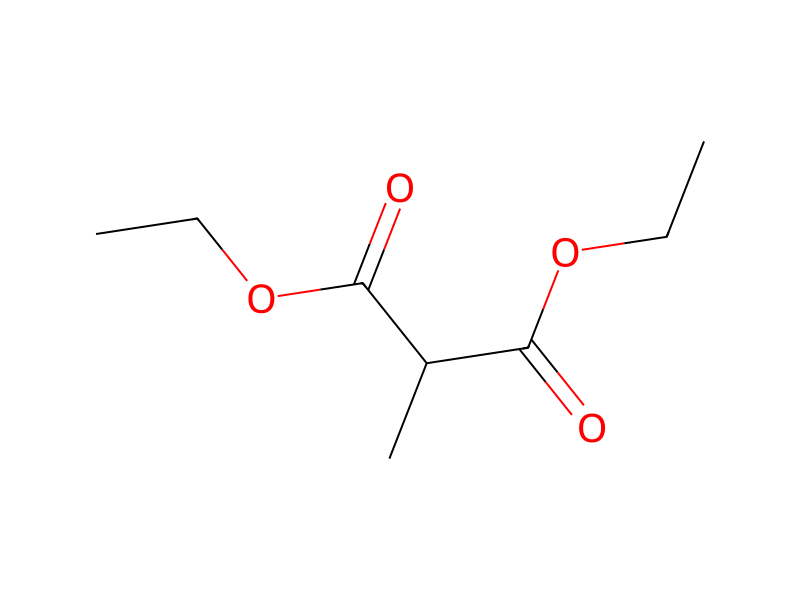
[CH3:1][CH:2]([C:8](OCC)=O)[C:3]([O:5]CC)=O.[Cl:13][C:14]1[CH:19]=[C:18]([Cl:20])[CH:17]=[CH:16][C:15]=1CCl.[OH-].[K+].Cl.O=S(Cl)Cl.[Al+3].[Cl-].[Cl-].[Cl-]>C(O)C.O.ClCCl>[Cl:13][C:14]1[CH:19]=[C:18]([Cl:20])[CH:17]=[C:16]2[C:15]=1[CH2:8][CH:2]([CH3:1])[C:3]2=[O:5]Participants
Reactant 6





Product 1

Reagents, catalysts & solvents 3



Procedure
To a solution of sodium ethoxide in ethanol obtained from 4.80 g (0.21 mol) of sodium and 120 ml of anhydrous ethanol, a solution of 36.5 g (0.21 mol) of diethyl methylmalonate in 50 ml of ethanol was added dropwise while vigorously stirring for 15 min. Then, 39.1 g (0.20 mol) of 2,4-dichloro-1-(chloromethyl)benzene was added dropwise with such a rate, so the reaction mixture would be slowly refluxing. The resulting mixture was additionally refluxed for 4 h, then cooled to room temperature, and a solution of 40 g of potassium hydroxide in 100 ml of water was added. This mixture was refluxed for 3 h, and then ethanol was distilled off at atmospheric pressure. The solution obtained was cooled to ambient temperature and acidified by saturated hydrochloric acid to pH 1. The precipitate formed was filtered off, washed with 2×200 ml of cold water, and dried in air. The dibacic acid obtained was then dehcarboxylated by heating it at 160° C. for 2 h. To the viscous oil obtained, 40 ml of dichloromethane and 60 ml of SOCl2 were added, and the resulting mixture was refluxed for 2 h. Dichloromethane and an excess of SOCl2 were distilled off, and the residue was dissolved in 50 ml of anhydrous dichloromethane. The solution obtained was added dropwise to a suspension of 25.3 g (0.19 mol) of AlCl3 in 260 ml of dichloromethane for 1 h at 0° C. The reaction mixture was refluxed for 3 h, then cooled to room temperature, poured on 500 cm3 of ice, and finally acidified by saturated HCl to pH 3. The organic layer was separated, and the aqueous layer was washed with 3×300 ml of methyl-tert-butyl ether. The combined organic fractions were dried over K2CO3 and then evaporated to dryness. The title product was isolated fractional distillation in vacuum, bp 135-138° C./1 mm Hg. Yield 37.0 g (86%).
Workup
- temperatureso the reaction mixture would be slowly refluxing
- temperatureThe resulting mixture was additionally refluxed for 4 h
- temperatureThis mixture was refluxed for 3 h
- distillationethanol was distilled off at atmospheric pressure
- customThe solution obtained
- temperaturewas cooled to ambient temperature
- customThe precipitate formed
- filtrationwas filtered off
- washwashed with 2×200 ml of cold water
- customdried in air
- customThe dibacic acid obtained
- temperatureby heating it at 160° C. for 2 h
- customTo the viscous oil obtained
- temperaturethe resulting mixture was refluxed for 2 h
- distillationDichloromethane and an excess of SOCl2 were distilled off
- dissolutionthe residue was dissolved in 50 ml of anhydrous dichloromethane
- customThe solution obtained
- temperatureThe reaction mixture was refluxed for 3 h
- temperaturecooled to room temperature
- customThe organic layer was separated
- washthe aqueous layer was washed with 3×300 ml of methyl-tert-butyl ether
- dry with materialThe combined organic fractions were dried over K2CO3
- customevaporated to dryness
Sources & evidence
- ORD record
- ord-286cda6a8e1a46619d0337c9f6a67508
- Source dataset
- uspto-grants-2008_11
- Patent number
- US07446216B2
Reaction notes
Loading…