Methyl iodide → Diphenyl methylphosphonate
Reaction equation

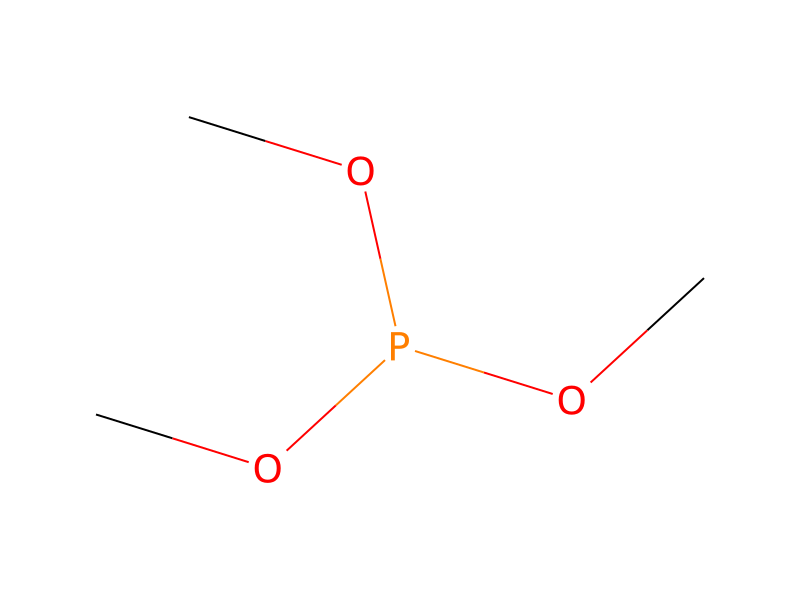
[P:1]([O:16]C1C=CC=CC=1)([O:9][C:10]1[CH:15]=[CH:14][CH:13]=[CH:12][CH:11]=1)[O:2][C:3]1[CH:8]=[CH:7][CH:6]=[CH:5][CH:4]=1.CI.P(OC)(OC)O[CH3:27]>>[CH3:27][P:1](=[O:16])([O:9][C:10]1[CH:15]=[CH:14][CH:13]=[CH:12][CH:11]=1)[O:2][C:3]1[CH:8]=[CH:7][CH:6]=[CH:5][CH:4]=1Participants



Conditions
- Temperature
- 210 °C
Procedure
To a three-necked flask equipped with thermometer, magnetic stirrer, distillation head and nitrogen inlet 163 g (0.52 mol) of triphenyl phosphite and 1.0 mL of methyl iodide were charged. Then, 32.7 g (0.26 mol) of trimethyl phosphite was added drop-wise at 100–110° C. over the course of one hour. The reaction temperature was then raised to 210° C. and an exothermic reaction was observed. The reaction temperature was maintained at 230° C. for two hours, and the reaction mixture was analyzed before it underwent transesterification. Diphenyl methylphosphonate was obtained as a liquid. The 31P NMR (CDCl3) indicated 95% diphenyl methylphosphonate. The impurities included triphenyl phosphate (0.8%, δ=−16.4 ppm), trimethyl phosphate (0.6%, δ=−10.3 ppm), and unknown compounds (δ=19.8, 20.4. 28.4 ppm). The acid number of this crude diphenyl methylphosphonate was 5.4 mg KOH/g
Workup
- additionwere charged
- customan exothermic reaction
- temperatureThe reaction temperature was maintained at 230° C. for two hours
Sources & evidence
- ORD record
- ord-aff8533de1374141a8909be6d4980c4c
- Source dataset
- uspto-grants-2008_11
- Patent number
- US07449526B2
Reaction notes
Loading…