Diisopropylamine → [(4-Methoxy-3-methylphenyl)ethynyl](trimethyl)silane
Reaction equation

Br[C:2]1[CH:7]=[CH:6][C:5]([O:8][CH3:9])=[C:4]([CH3:10])[CH:3]=1.C(NC(C)C)(C)C.[CH3:18][Si:19]([C:22]#[CH:23])([CH3:21])[CH3:20]>C1(C)C=CC=CC=1.[Cu](I)I>[CH3:9][O:8][C:5]1[CH:6]=[CH:7][C:2]([C:23]#[C:22][Si:19]([CH3:21])([CH3:20])[CH3:18])=[CH:3][C:4]=1[CH3:10]Participants





Conditions
- Temperature
- 45 °C
Procedure
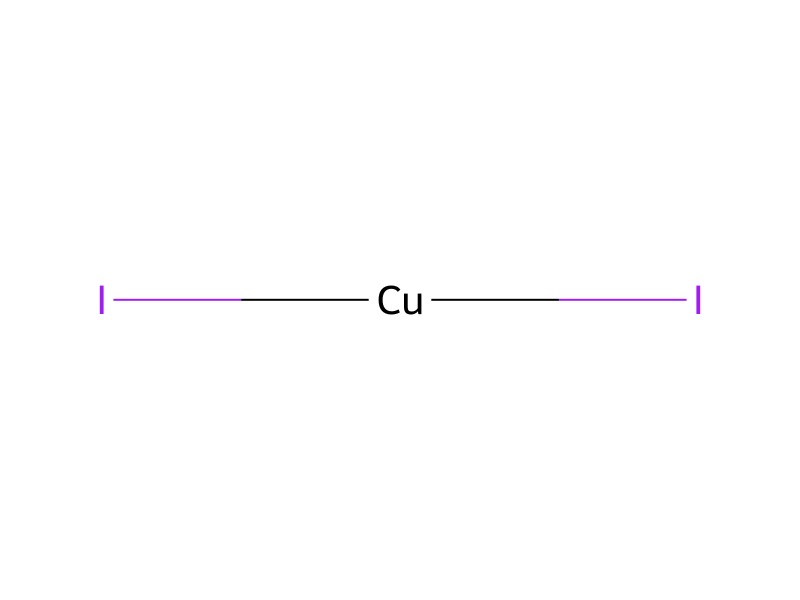
A solution of 4-bromo-1-methoxy-2-methylbenzene (6.702 g) in toluene was treated with tetrakis(triphenylphosphie)palladium (0) (1.15 g), followed by diisopropylamine (23 mL), trimethylsilyl acetylene (4.7 mL) and copper iodide (I) (0.127 g). The reaction was heated at 45° C. in nitrogen atmosphere overnight and evaporated to dryness. The resultant residue was applied on a large silica pad and eluted with hexane:ethyl acetate (2:1). The elute was evaporated to dryness to give the silane intermediate as a brown oil (7.167 g). The compound was characterized by LCMS analysis. LCMS Conditions: HP 1100 HPLC system; Waters Xterra MS C18, 2 mm (i.d.)×50 mm (length), 3.5 um column, set at 50° C.; Flow rate 1.0 mL/min; Solvent A: 0.02% NH4OH in water; Solvent B 0.02% NH4OH in ACN; Gradient: Time O: 10% B; 2.5 min 90% B; 3 min 90% B; Sample concentration: ˜2.0 mM; Injection volume: 5 uL; Detection: 220 nm, 254 nm DAD
Workup
- customevaporated to dryness
- washeluted with hexane:ethyl acetate (2:1)
- customThe elute was evaporated to dryness
Sources & evidence
- ORD record
- ord-734c8e0e62c94dfdb8a64f925b354391
- Source dataset
- uspto-grants-2008_11
- Patent number
- US07452885B2
Reaction notes
Loading…