Isobutylamine → (5-Bromo-2-chloro-pyrimidin-4-yl)-isobutyl-amine
Reaction equation

[Br:1][C:2]1[C:3](Cl)=[N:4][C:5]([Cl:8])=[N:6][CH:7]=1.[CH2:10]([NH2:14])[CH:11]([CH3:13])[CH3:12].CCCCCC>CO.CCOC(C)=O>[Br:1][C:2]1[C:3]([NH:14][CH2:10][CH:11]([CH3:13])[CH3:12])=[N:4][C:5]([Cl:8])=[N:6][CH:7]=1Participants
6
Reactant 3


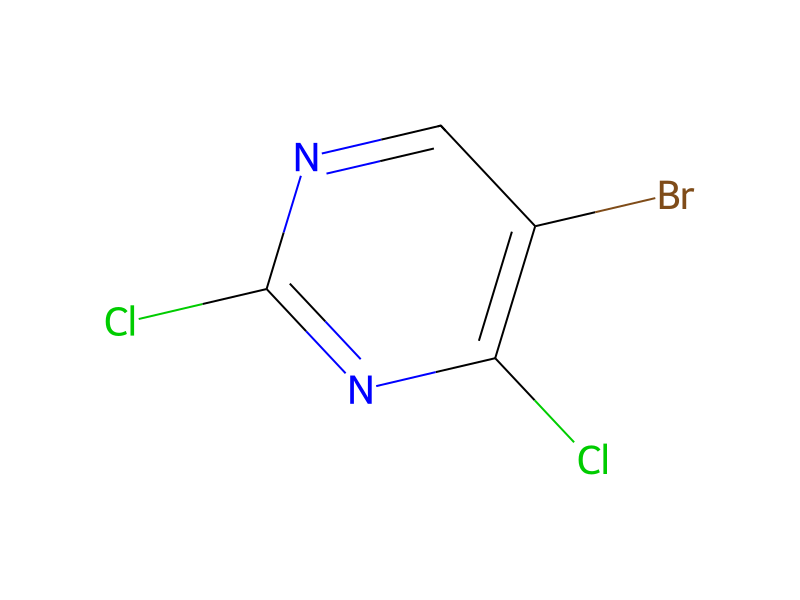
Product 1

Reagents, catalysts & solvents 2


Procedure
To a solution of 5-bromo-2,4-dichloropyrimidine (14.0 mmol) in methanol (30 ml) is added isobutylamine (28.0 mmol) at room temperature. The mixture is stirred at room temperature for one day and diluted with AcOEt. The organic layer is washed with water and brine, dried over sodium sulfate and concentrated. Chromatography on silica gel (n-hexane and n-hexane:AcOEt=25:1) gives the product in 78% yield. Rf=0.52 (n-hexane:AcOEt=4:1)
Workup
- washThe organic layer is washed with water and brine
- dry with materialdried over sodium sulfate
- concentrationconcentrated
- customChromatography on silica gel (n-hexane and n-hexane:AcOEt=25:1) gives the product in 78% yield
Sources & evidence
- ORD record
- ord-92d83aee66944604aa0b6ee00fe41e5a
- Source dataset
- uspto-grants-2008_11
- Patent number
- US07452886B2
Reaction notes
Loading…