Diisopropylamine → 4-(7-Bromo-3-isoquinolinyl)benzonitrile
Reaction equation

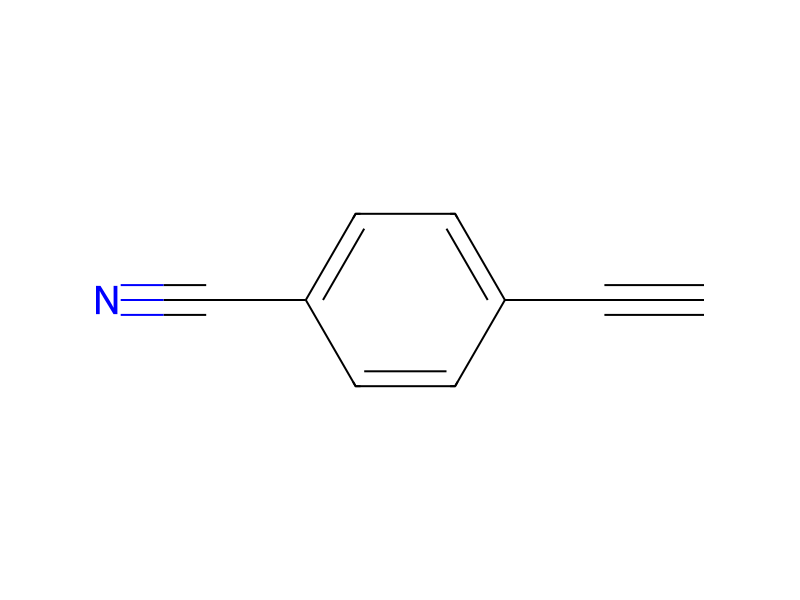
[Br:1][C:2]1[CH:3]=[CH:4][C:5](I)=[C:6](/[CH:8]=[N:9]/[C:10]([CH3:13])([CH3:12])C)[CH:7]=1.[C:15]([C:17]1[CH:22]=[CH:21]C(C#C)=[CH:19][CH:18]=1)#[N:16].C(NC(C)C)(C)C>C1(C)C=CC=CC=1.[Cu]I.Cl[Pd](Cl)([P](C1C=CC=CC=1)(C1C=CC=CC=1)C1C=CC=CC=1)[P](C1C=CC=CC=1)(C1C=CC=CC=1)C1C=CC=CC=1>[Br:1][C:2]1[CH:7]=[C:6]2[C:5]([CH:13]=[C:10]([C:12]3[CH:21]=[CH:22][C:17]([C:15]#[N:16])=[CH:18][CH:19]=3)[N:9]=[CH:8]2)=[CH:4][CH:3]=1Participants
7
Reactant 3


Product 1

Reagents, catalysts & solvents 3



Procedure
The product from Example 62D (3.6 mmol), 4-cyanophenylacetylene (4.3 mmol), CuI (0.2 mmol), PdCl2(PPh3)2 (0.1 mmol), and diisopropylamine (5.3 mmol) can be combined in toluene (15 mL) and processed as described in Example 62E to provide the title compound.
Sources & evidence
- ORD record
- ord-87855421b6e9469eb75e3eb318c8589e
- Source dataset
- uspto-grants-2008_11
- Patent number
- US07456196B2
Reaction notes
Loading…