Dipropylamine → 8-Bromo-2-dipropylamino-1,2,3,4-tetrahydronaphthalene
Reaction equation

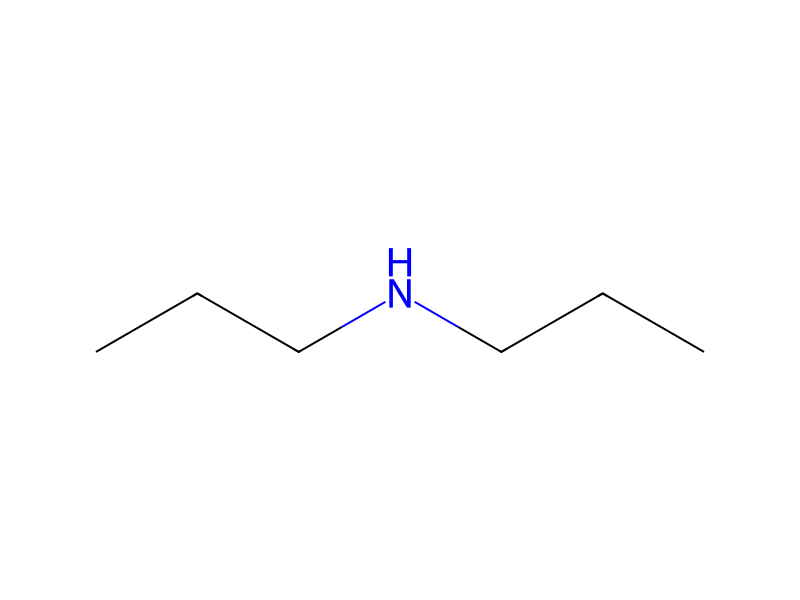
[Br:1][C:2]1[CH:3]=[CH:4][CH:5]=[C:6]2[C:11]=1[CH2:10][C:9](=O)[CH2:8][CH2:7]2.[CH2:13]([NH:16][CH2:17][CH2:18][CH3:19])[CH2:14][CH3:15].C([BH3-])#N.[Na+]>>[CH2:13]([N:16]([CH2:17][CH2:18][CH3:19])[CH:9]1[CH2:8][CH2:7][C:6]2[C:11](=[C:2]([Br:1])[CH:3]=[CH:4][CH:5]=2)[CH2:10]1)[CH2:14][CH3:15]Participants
4



Procedure
8-Bromo-2-tetralone (28.8 gm, 128 mMol) was reacted with dipropylamine (34.3 mL, 250 mMol) and sodium cyanoborohydride (6.3 gm, 100 mMol) as described in Example 3 to give the title compound as a light yellow oil. The hydrochloride salt was formed and crystallization (acetone) gave colorless crystals (m.p.=150.5°-152° C.).
Sources & evidence
- ORD record
- ord-b936a313be9242deb7fe486dfe0f11ac
- Source dataset
- uspto-grants-1995_02
- Patent number
- US05389687
Reaction notes
Loading…