Phosphorus oxychloride → 2-Amino-6-chloropurine
Reaction equation

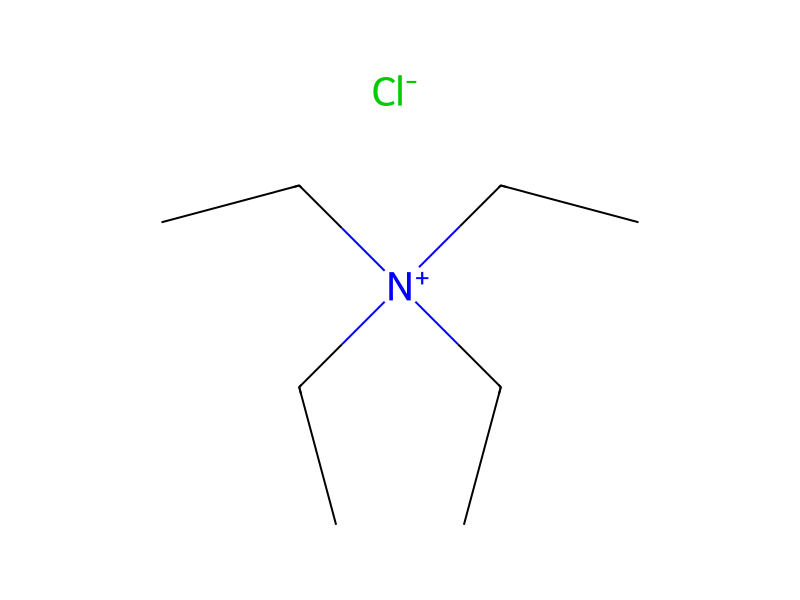
[NH:1]1[C:10](=O)[C:9]2[NH:8][CH:7]=[N:6][C:5]=2[N:4]=[C:2]1[NH2:3].P(Cl)(Cl)([Cl:14])=O>[Cl-].C([N+](CC)(CC)CC)C.C(#N)C>[NH2:3][C:2]1[N:4]=[C:5]2[C:9]([NH:8][CH:7]=[N:6]2)=[C:10]([Cl:14])[N:1]=1Participants
Reactant 2


Product 1

Reagents, catalysts & solvents 2

Procedure
4.5 g (0.03 mol) of guanine (manufactured by Sumika Fine Chemicals Co., Ltd.), 7.5 g (0.045 mol) of tetraethylammonium chloride and 27.1 g (0.177 mol) of phosphorus oxychloride were added to 60 ml of acetonitrile, followed by stirring for 70 minutes under heating refluxing conditions. After cooling, the crystal was collected by filtration and suspended in 50 ml of water. This suspension was made alkaline with a 30% aqueous solution of sodium hydroxide and then adjusted to a pH of 7 with 1N hydrochloric acid. The resulting crystal was collected by filtration and dissolved in 50 ml of 25% aqueous ammonia with heating, and the insoluble substances were filtered out. The mother liquor was concentrated under reduced pressure to yield 2.0 g (0.012 mol) of a precipitating crystal of 2-amino-6-chloropurine (yield 39%).
Workup
- temperatureunder heating
- temperaturerefluxing conditions
- temperatureAfter cooling
- filtrationthe crystal was collected by filtration
- filtrationThe resulting crystal was collected by filtration
- dissolutiondissolved in 50 ml of 25% aqueous ammonia
- temperaturewith heating
- filtrationthe insoluble substances were filtered out
- concentrationThe mother liquor was concentrated under reduced pressure
Sources & evidence
- ORD record
- ord-049d7a5bb3fb4f2e866e8cf0479725c1
- Source dataset
- uspto-grants-1995_02
- Patent number
- US05391733
Reaction notes
Loading…