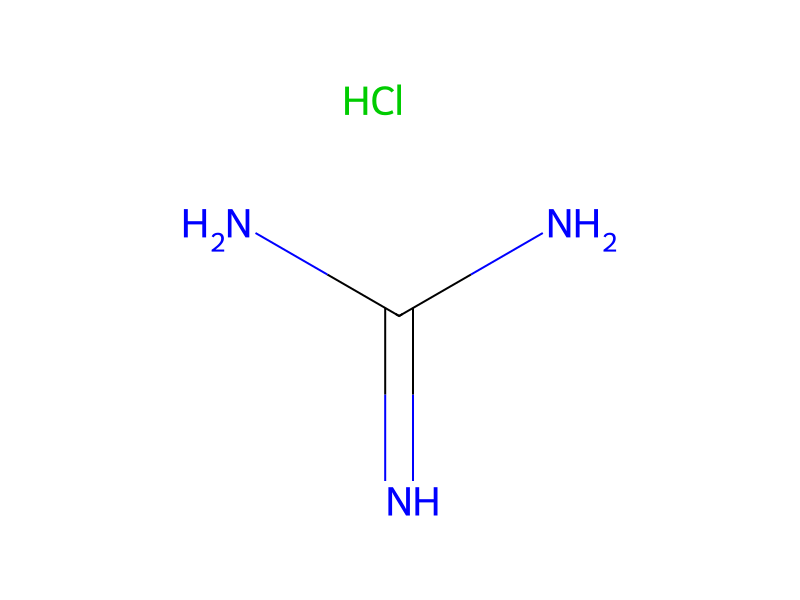
Guanidine Hydrochloride → HCID 23323052, compound
Reaction equation

[CH3:1][O:2][C:3]1[C:12]([O:13][CH3:14])=[C:11]([O:15][CH3:16])[CH:10]=[C:9]2[C:4]=1[CH:5]=[CH:6][C:7]([CH2:17][C:18](=[CH:21]NC1C=CC=CC=1)[C:19]#[N:20])=[CH:8]2.[ClH:29].[NH2:30][C:31]([NH2:33])=[NH:32].C[O-].[Na+]>C(O)C>[ClH:29].[NH2:32][C:31]1[N:33]=[C:19]([NH2:20])[C:18]([CH2:17][C:7]2[CH:6]=[CH:5][C:4]3[C:9](=[CH:10][C:11]([O:15][CH3:16])=[C:12]([O:13][CH3:14])[C:3]=3[O:2][CH3:1])[CH:8]=2)=[CH:21][N:30]=1Participants
5
Reactant 3


Product 1

Reagents, catalysts & solvents 1

Procedure
The aldehyde from above was converted to 2-(5,6,7-trimethoxy-2-naphthylmethyl)-3-anilinoacrylonitrile on a 8 mmol scale in the same manner as Example 5-A. The crude product from this reaction was cyclised with guanidine hydrochloride and sodium methylate in ethanol as in Example 5-B to give the title compound as the free base, 0.74 g (27% yield). This was recrystallised from ethanol plus an equivalent of hydrochloric acid, 0.26 g, mp 252°-254°. Anal. Calcd. for C18H20N4O3HCl: C 57.37; H, 5.62; N, 14.87; Cl, 9.41. Found: C, 57.11; H, 5.67; N, 14.79; Cl, 9.31.
Sources & evidence
- ORD record
- ord-a4236a183caf4aceaef4d09e564cc81f
- Source dataset
- uspto-grants-1986_05
- Patent number
- US04587341
Reaction notes
Loading…