Tetrahydrofuran → Formaldehyde
Reaction equation

[O:1]1[CH2:5][CH2:4][CH2:3][CH2:2]1.[CH2:6]([OH:11])[CH2:7][CH2:8][CH2:9][OH:10]>O>[CH2:6]([OH:11])[CH2:7][CH2:8][CH2:9][OH:10].[CH:2]#[CH:3].[CH2:2]=[O:1].[CH2:5]([OH:1])[C:4]#[C:3][CH2:2][OH:10]Participants
7
Reactant 2

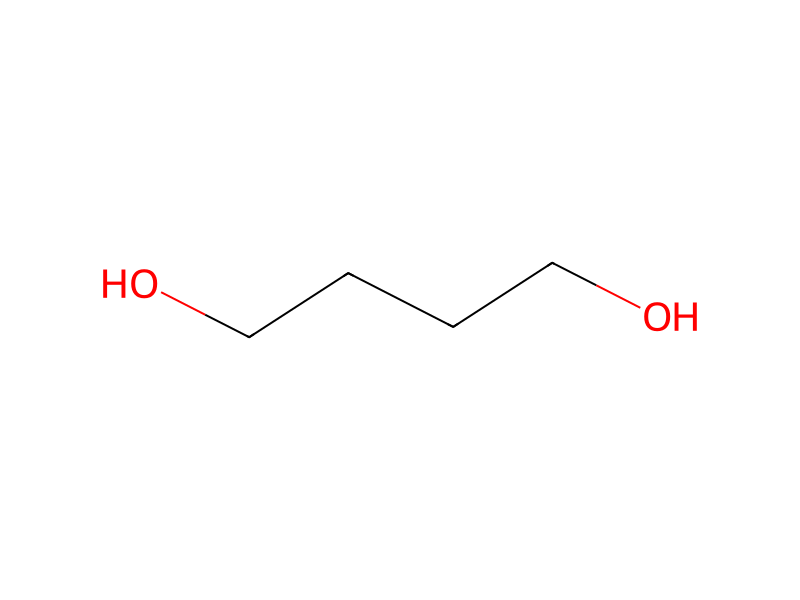
Product 4


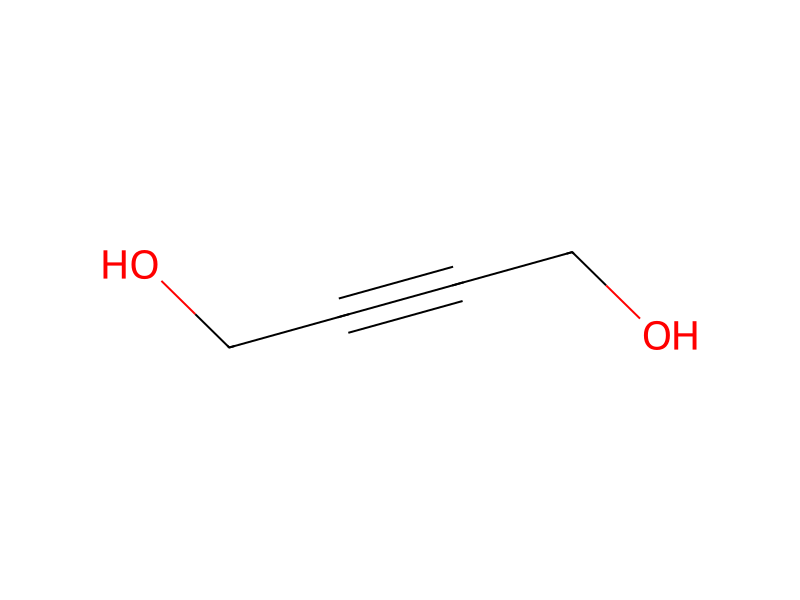
Reagents, catalysts & solvents 1

Procedure
We have found that this object is achieved by a novel process in which tetrahydrofuran is prepared from an aqueous butane-1,4-diol solution by eliminating water in the aqueous phase at elevated temperatures, under superatmospheric pressure and in the presence of an acid, wherein a crude aqueous solution of butane-1,4-diol, obtained by reaction of acetylene with aqueous formaldehyde and catalytic hydrogenation of the resulting but-2-yne-1,4-diol solution, is, when starting with a crude alkaline aqueous solution, neutralized with sulfuric acid, acidified by adding phosphoric acid, and then heated at from 200° to 260° C. under superatmospheric pressure.
Sources & evidence
- ORD record
- ord-12681aaa946b4dca9fa235e3d8627b76
- Source dataset
- uspto-grants-1986_05
- Patent number
- US04588827
Reaction notes
Loading…