Water → Benzyl 4-(3-hydroxypropyl)piperidine-1-carboxylate
Reaction equation

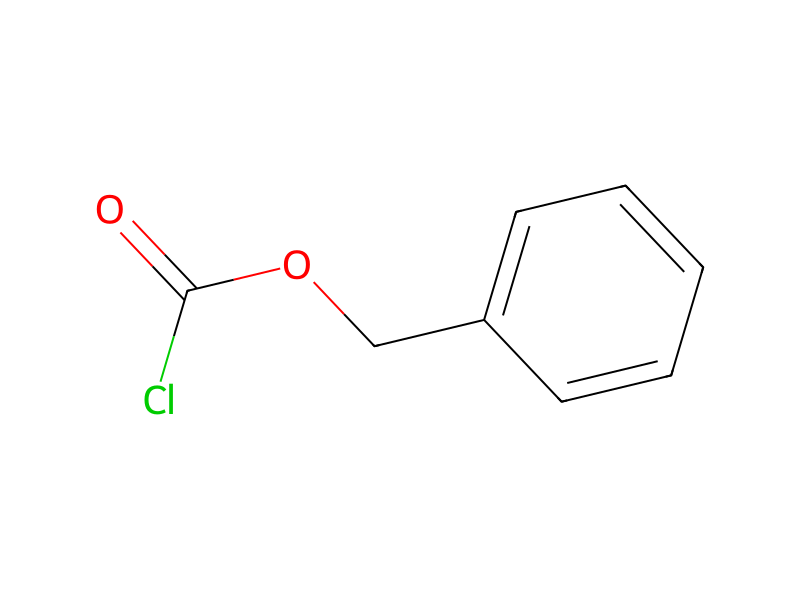
O.[CH2:2]([O:9][C:10](Cl)=[O:11])[C:3]1[CH:8]=[CH:7][CH:6]=[CH:5][CH:4]=1.[NH:13]1[CH2:18][CH2:17][CH:16]([CH2:19][CH2:20][CH2:21][OH:22])[CH2:15][CH2:14]1.C(N(CC)CC)C>C(Cl)Cl>[CH2:2]([O:9][C:10]([N:13]1[CH2:18][CH2:17][CH:16]([CH2:19][CH2:20][CH2:21][OH:22])[CH2:15][CH2:14]1)=[O:11])[C:3]1[CH:8]=[CH:7][CH:6]=[CH:5][CH:4]=1Participants
6
Reactant 4



Product 1

Reagents, catalysts & solvents 1

Procedure
To a stirred mixture of methylene chloride (400 ml) and water (40 ml) are added dropwise benzyloxycarbonyl chloride (100 g) and a solution of 3-(4-piperidyl)propanol (84 g) and triethylamine (65 g) in methylene chloride (100 ml) for 45 minutes at room temperature. After addition is completed, stirring is continued for further 1 hour. The methylene chloride layer is separated, washed with water, dried over anhydrous magnesium sulfate and concentrated under reduced pressure. Vacuum distillation of the oily residue is carried out to remove the low boiling material (50°-60° C./5 mmHg). 3-(1-Benzyloxycarbonyl-4-piperidyl)propanol (110 g) is obtained as a yellow oily residue.
Workup
- additionAfter addition
- customThe methylene chloride layer is separated
- washwashed with water
- dry with materialdried over anhydrous magnesium sulfate
- concentrationconcentrated under reduced pressure
- distillationVacuum distillation of the oily residue
- customto remove the low boiling material (50°-60° C./5 mmHg)
Sources & evidence
- ORD record
- ord-005d6efe11d24c179d57afc70367f3a9
- Source dataset
- uspto-grants-1986_05
- Patent number
- US04591458
Reaction notes
Loading…