2,4-Dichloropyridine → N-(4-chloro-2-pyridinyl)-4,5-dimethyl-1,3-oxazol-2-amine
Reaction equation

Cc1nc(N)oc1C.Clc1ccnc(Cl)c1>C1COCCO1.CC1(C)c2cccc(P(c3ccccc3)c3ccccc3)c2Oc2c(P(c3ccccc3)c3ccccc3)cccc21.O=C(/C=C/c1ccccc1)/C=C/c1ccccc1.O=C(/C=C/c1ccccc1)/C=C/c1ccccc1.O=C(/C=C/c1ccccc1)/C=C/c1ccccc1.O=C([O-])[O-].[Cs+].[Cs+].[Pd].[Pd]>Cc1nc(Nc2cc(Cl)ccn2)oc1CParticipants
Reactant 2
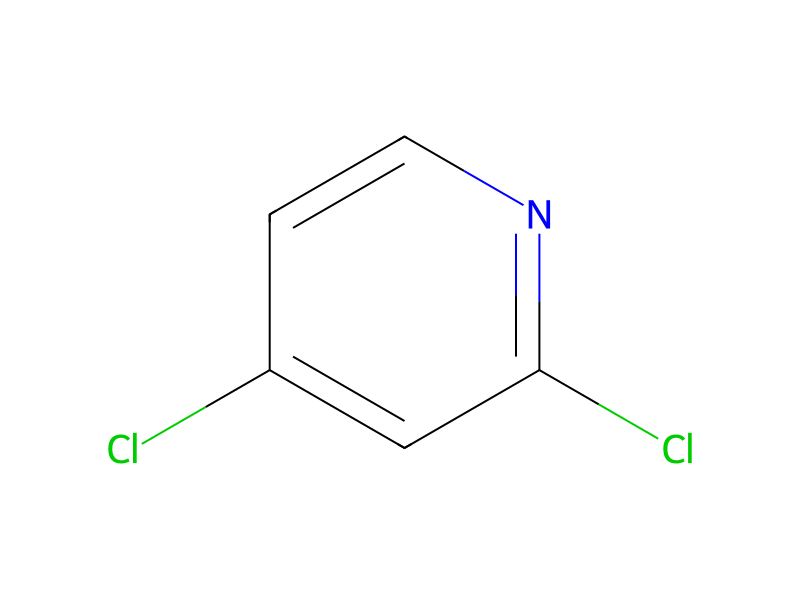

Product 1

Reagents, catalysts & solvents 4




Conditions
- Temperature
- 140 °C
Procedure
Objective: Repeat of experiment in an attempt to improve isolated yield using different normal phase eluent system (isolation was problematic for ). Pd2(dba)3 (22.89 mg, 0.025 mmol), 9,9-dimethyl-4,5-bis(diphenylphosphino)xanthene (43.4 mg, 0.075 mmol), 2,4-dichloropyridine (148 mg, 1.00 mmol), cesium carbonate (652 mg, 2.00 mmol) and 4,5-dimethyloxazol-2-amine (112 mg, 1.00 mmol) were added to an oven dried microwave vial, the vial was capped and placed under an inert atmosphere, dioxane (4 mL) was added and the resulting mixture was heated to 140 °C for 1 h by microwave irradiation under a nitrogen atmosphere. The crude product was purified by flash silica chromatography, elution gradient 0 to 3% methanolic ammmonia (7 M) in DCM. Pure fractions were evaporated to dryness to afford P1 as a brown solid. The product was further purified by crystallisation from hot DCM/MeOH to afford N-(4-chloropyridin-2-yl)-4,5-dimethyloxazol-2-amine (34.0 mg, 15.20 %) as a beige solid. Conclusion: A relatively low yield of the desired product was isolated here, it may be possible to increase the above yield at higher temperature or by using excess amine as electron rich oxazoles are prone to decomposition.
Sources & evidence
- ORD record
- ord-b88a57a3139142d0b67529e7ea94eb7c
- Source dataset
- 750 AstraZeneca ELN dataset
- Original link
- View source
Reaction notes
Loading…