Potassium Carbonate → Pyridine-4-carboxaldehyde (3-Chloropropyl)imine
Reaction equation

Cl.[Cl:2][CH2:3][CH2:4][CH2:5][NH2:6].[N:7]1[CH:12]=[CH:11][C:10]([CH:13]=O)=[CH:9][CH:8]=1.C([O-])([O-])=O.[K+].[K+]>O>[Cl:2][CH2:3][CH2:4][CH2:5][N:6]=[CH:13][C:10]1[CH:11]=[CH:12][N:7]=[CH:8][CH:9]=1Participants
5
Reactant 3

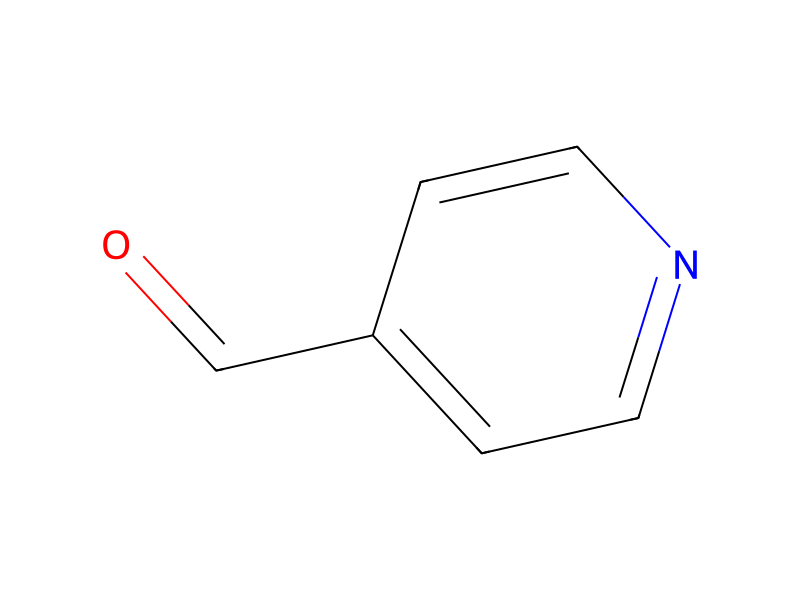

Product 1

Reagents, catalysts & solvents 1

Procedure
To 3-chloropropylamine HCl (15.1 g, 0.120 moles (hereinafter mol)) and H2O (100 mL) was added pyridine-4-carboxaldehyde (9.55 mL, 0.100 mol), then K2CO3 (8.28 g, 0.060 mol) then CH2CL2 (100 mL) and the mixture was stirred for 40 min. The phases were separated and the aq phase was extracted with additional CH2Cl2 (2×50 mL), dried (Na2SO4) and concentrated to afford 17.1 g (94%) 1H NMR (CD3Cl): d 8.69 (d, J=4.5 Hz, 2H, 8.32 (s, 1H), 8.28 (s, 1H), 7.58 (d, J=4.5 Hz, 2H), 3.71 (m, 2H), 3.63 (t, J=6 Hz, 2H), 2.24 (t, J=6 Hz, 2H). The presence of 9% of the aldehyde was evident by 1H NMR.
Workup
- customThe phases were separated
- extractionthe aq phase was extracted with additional CH2Cl2 (2×50 mL)
- dry with materialdried (Na2SO4)
- concentrationconcentrated
- customto afford 17.1 g (94%) 1H NMR (CD3Cl): d 8.69 (
Sources & evidence
- ORD record
- ord-f5dc89926fb744dbae3dbf00f35ac64d
- Source dataset
- uspto-grants-2001_04
- Patent number
- US06222036B1
Reaction notes
Loading…