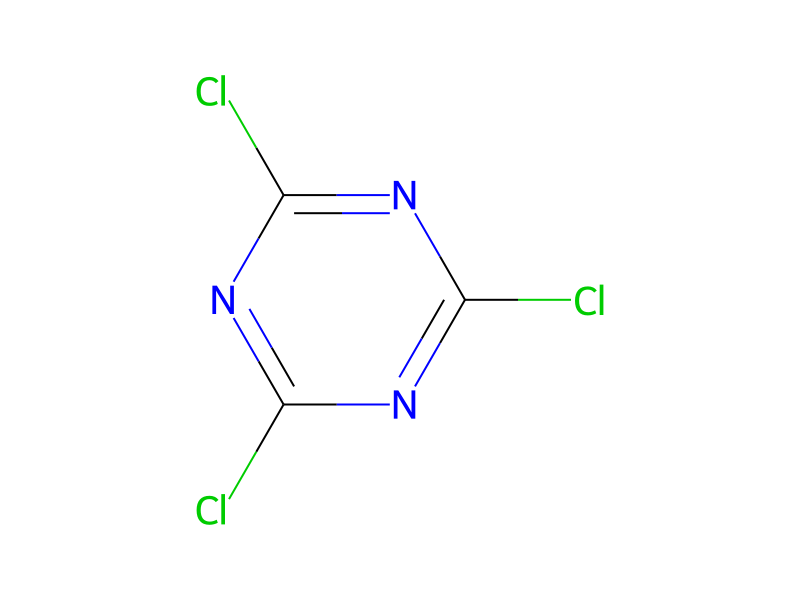
Cyanuric chloride → HCID 20429677, compound
Reaction equation

[N:1]1[C:8](Cl)=[N:7][C:5](Cl)=[N:4][C:2]=1Cl.[C:10]1([Mg]Br)[CH:15]=[CH:14][CH:13]=[CH:12][CH:11]=1.[NH2:18][C:19]1[CH:20]=[C:21]([C:25]#[CH:26])[CH:22]=[CH:23][CH:24]=1.C([O-])([O-])=O.[K+].[K+]>C(Cl)(Cl)Cl.O>[C:10]1([C:2]2[N:4]=[C:5]([NH:18][C:19]3[CH:24]=[CH:23][CH:22]=[C:21]([C:25]#[CH:26])[CH:20]=3)[N:7]=[C:8]([NH:18][C:19]3[CH:24]=[CH:23][CH:22]=[C:21]([C:25]#[CH:26])[CH:20]=3)[N:1]=2)[CH:15]=[CH:14][CH:13]=[CH:12][CH:11]=1Participants
7





Procedure
One mole of cyanuric chloride was treated with phenylmagnesium bromide as described in Step I of Example I. The resulting reaction product (10.0 g, 0.044 mole) in CHCl3 (100 ml) was stirred in a 250 ml 3-neck round bottom flask while m-aminophenylacetylene (10.5 g, 0.09 mole) was added dropwise with cooling. To this mixture was added K2CO3 (12.4 g, 0.09 mole) and water (20 ml). The organic layer was separated, dried, and the solvent evaporated. The residue was triturated in benzene and dried to give 6-phenyl-2,4-bis(3-ethynylphenylamino)-s-triazine a compound that melted at 210° C. with polymerization. Thermo-gravimetric analysis showed that the polymer was stable to 425° C.
Workup
- additionwas added dropwise
- temperaturewith cooling
- customThe organic layer was separated
- customdried
- customthe solvent evaporated
- customThe residue was triturated in benzene
- customdried
Sources & evidence
- ORD record
- ord-865361605b6b473b97436e5841037f59
- Source dataset
- uspto-grants-1984_04
- Patent number
- US04442278
Reaction notes
Loading…