Ammonia → Lofexidine
Reaction equation

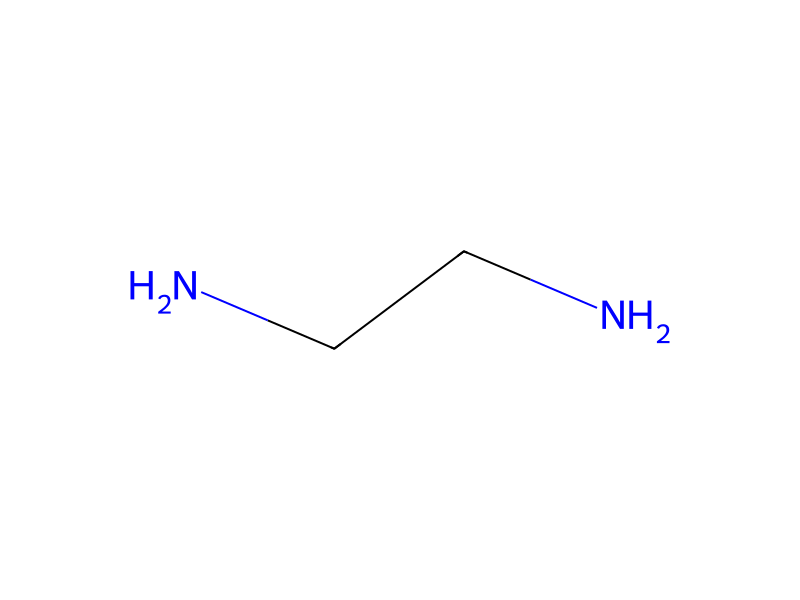
N.[Cl:2][C:3]1[CH:14]=[CH:13][CH:12]=[C:11]([Cl:15])[C:4]=1[O:5][CH:6]([CH3:10])[C:7]([NH2:9])=O.C[N:17]1CCO[CH2:19][CH2:18]1.Cl.NCCN>C(O)C.C(Cl)(Cl)Cl>[Cl:2][C:3]1[CH:14]=[CH:13][CH:12]=[C:11]([Cl:15])[C:4]=1[O:5][CH:6]([C:7]1[NH:17][CH2:18][CH2:19][N:9]=1)[CH3:10]Participants







Procedure
Another process is also based on (+)-2-(2,6-dichlorophenoxy)-propionic acid ethylester which is reacted with an ethanolic solution of ammonia at room temperature and is converted in to (-)-2-(2,6dichlorophenoxy)-propionic acid amide which is difficultly soluble in ethanol. This amide is dehydrated at from 0° to 30° C. with a titanium tetrachloride/tetrahydrofuran complex and 4-methyl-morpholine in chloroform into (+)-2-(2,6-dichlorophenoxy)-propionic acid nitrile. By introducing hydrogen chloride at 0° C., the nitrile is then converted with ethanol in chloroform into (+)-2-(2,6-dichlorophenoxy)-propionimido acid ethylester hydrochloride, this compound is dissolved in ethanol and is cyclised by adding 1,2-diaminoethane to produce (+)-2-[1-(2,6-dichlorophenoxy)-ethyl]-1,3-diazacyclopent-2-ene. Analogously to the previous process, (+)-2-[1-(2,6-dichlorophenoxy)-ethyl]-1,3-diazacyclopent-2-ene hydrochloride is produced from the (+) base thus obtained.
Sources & evidence
- ORD record
- ord-697e45b607ee44b68ac77f03deca80db
- Source dataset
- uspto-grants-1984_04
- Patent number
- US04443464
Reaction notes
Loading…