3-Nitrobenzaldehyde → 3-Nitrostyrene
Reaction equation

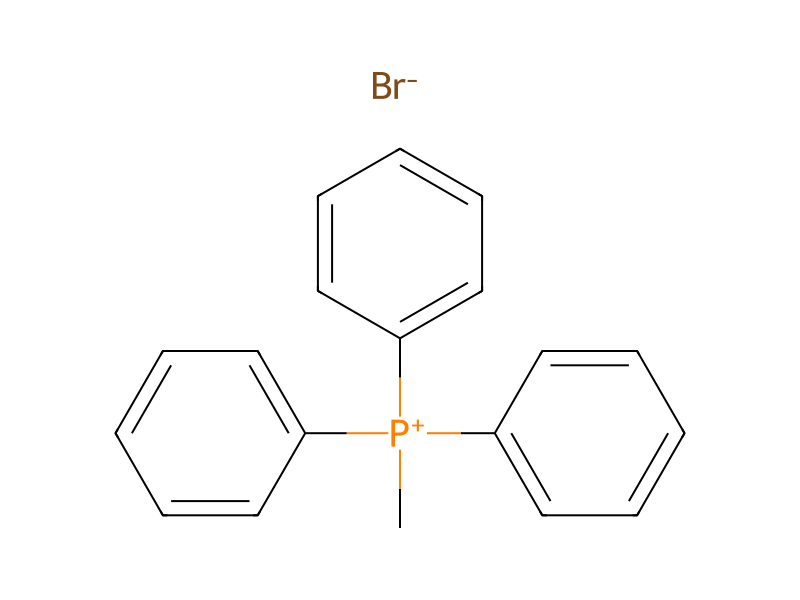
[N+:1]([C:4]1[CH:5]=[C:6]([CH:9]=[CH:10][CH:11]=1)[CH:7]=O)([O-:3])=[O:2].[CH2:12]([Li])CCC.CCCCCC>[Br-].C[P+](C1C=CC=CC=1)(C1C=CC=CC=1)C1C=CC=CC=1>[CH:7]([C:6]1[CH:5]=[C:4]([N+:1]([O-:3])=[O:2])[CH:11]=[CH:10][CH:9]=1)=[CH2:12]Participants
5
Reactant 3



Product 1

Reagents, catalysts & solvents 1
Procedure
Treatment of 3-nitrobenzaldehyde (20 g) with methyltriphenylphosphonium bromide (61.5g) and n-butyllithium in hexane (172 mmol), as described in Example 1a, gave 3-ethenylnitrobenzene (10.3 g), δ (360 MHz, CDCl3), 5.44 and 5.59 (2H, 2d, CH2), 6.75 (1H, dd, CH), 7.49 (1H, t, 5-H), 7.70 (1H, dd, 4-H), 8.09 (1H, dd, 6-H) and 8.24 (1H, d, 2-H).
Sources & evidence
- ORD record
- ord-55eec336f68f4793a8f9bef4c706144a
- Source dataset
- uspto-grants-1993_12
- Patent number
- US05270309
Reaction notes
Loading…