Trifluoroacetic acid → 4-Octyl-2'-fluoro-4'-bromobiphenyl
Reaction equation

[C:1]([C:10]1[CH:15]=[CH:14][C:13]([C:16]2[CH:21]=[CH:20][C:19]([Br:22])=[CH:18][C:17]=2[F:23])=[CH:12][CH:11]=1)(=O)[CH2:2][CH2:3][CH2:4][CH2:5][CH2:6][CH2:7][CH3:8].FC(F)(F)C(O)=O.C([SiH](CC)CC)C>O>[CH2:1]([C:10]1[CH:15]=[CH:14][C:13]([C:16]2[CH:21]=[CH:20][C:19]([Br:22])=[CH:18][C:17]=2[F:23])=[CH:12][CH:11]=1)[CH2:2][CH2:3][CH2:4][CH2:5][CH2:6][CH2:7][CH3:8]Participants
5
Reactant 3

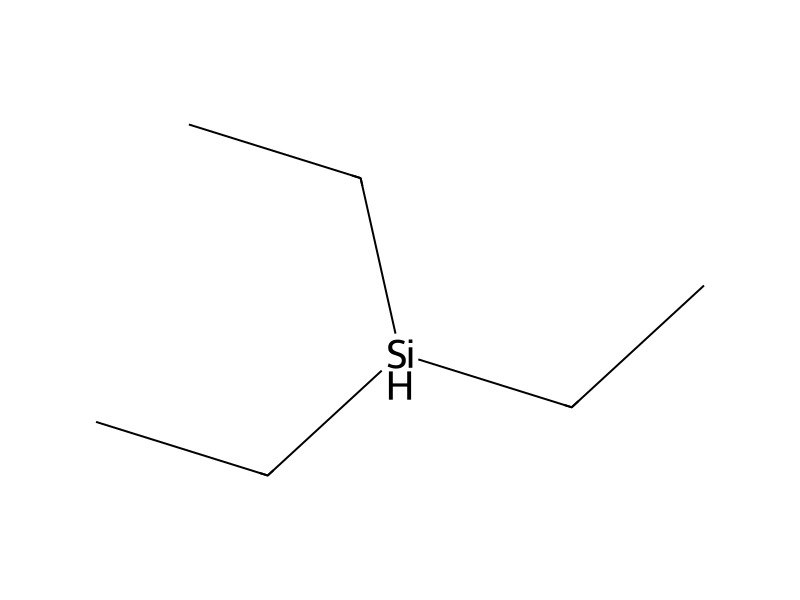

Product 1

Reagents, catalysts & solvents 1

Procedure
In a reactor were placed 3.75 g of 4-octanoyl-2'-fluoro-4'-bromobiphenyl and 20 ml of trifluroacetic acid, to which was added 2.4 g of triethylsilane at room temperature and stirred for 6 hours. Then, the reaction solution was added into water, extracted into benzene, washed sequentially with water, aqueous sodium hydrogencarbonate, and again water, and dehydrated over Glauber's salt. After the solvent was distilled off, the residue was evaporated in a glass tube oven (GTO) to obtain 2.56 g of 4-octyl-2'-fluoro-4'-bromobiphenyl (71.1%).
Workup
- customIn a reactor were placed
- extractionextracted into benzene
- washwashed sequentially with water, aqueous sodium hydrogencarbonate, and again water
- distillationAfter the solvent was distilled off
- customthe residue was evaporated in a glass tube oven (GTO)
Sources & evidence
- ORD record
- ord-2217cc47ec4d4b8f847a904bcca84492
- Source dataset
- uspto-grants-1993_12
- Patent number
- US05271867
Reaction notes
Loading…