Sodium hydride → HCID 21415005, compound
Reaction equation

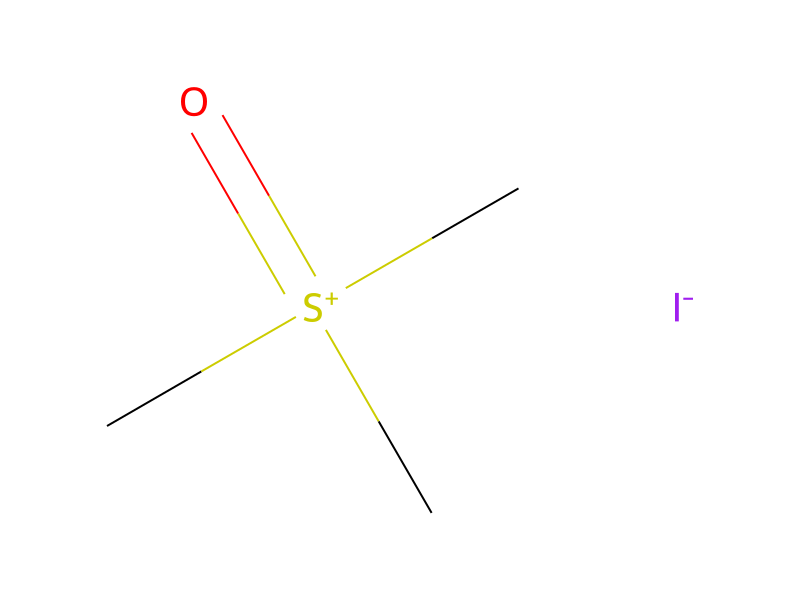
[C:1]1(CC=O)C2C3CCC(C4C3=CC=CC=4)C=2C=CC=1.[I-].C[S+](C)(C)=O.[H-].[Na+].[H][H].[CH:30]1[C:43]2[C:42]3([CH2:46][CH:47]=[O:48])[CH2:44][CH2:45][CH:35]([C:36]4[C:41]3=[CH:40][CH:39]=[CH:38][CH:37]=4)[C:34]=2[CH:33]=[CH:32][CH:31]=1>CS(C)=O.O>[O:48]1[CH2:1][CH:47]1[CH2:46][C:42]12[CH2:44][CH2:45][CH:35]([C:36]3[CH:37]=[CH:38][CH:39]=[CH:40][C:41]=31)[C:34]1[C:43]2=[CH:30][CH:31]=[CH:32][CH:33]=1Participants
8
Reactant 5




Product 1

Reagents, catalysts & solvents 2


Procedure
To convert the aldehyde into the epoxide, 19.6 g of trimethyloxosulphonium iodide are added to 2.2 g of sodium hydride in 175 ml of dimethyl sulphoxide. When evolution of hydrogen has ceased, a solution of 21 g of the crude 9,10-dihydro-9,10-ethano-9-anthryl-acetaldehyde in 35 ml of dimethyl sulphoxide is added dropwise and the batch is stirred for 20 minutes at room temperature and then for 30 minutes at 55°-60° C. The reaction mixture is then poured into 300 ml of water and after extraction with methylene chloride, the methylene chloride solution is isolated and evaporated to yield as residue the crude 9-(2,3-epoxy-propyl)-9,10-dihydro-9,10-ethano-anthracene in the form of a viscous oil.
Workup
- waitfor 30 minutes at 55°-60° C
- extractionafter extraction with methylene chloride
- customthe methylene chloride solution is isolated
- customevaporated
Sources & evidence
- ORD record
- ord-dea2b55e87e94adb8edcc92664b236a2
- Source dataset
- uspto-grants-1977_04
- Patent number
- US04017542
Reaction notes
Loading…