CID 406 → Dimethyl-2-oxo-3-phenylpropyl phosphonate
Reaction equation

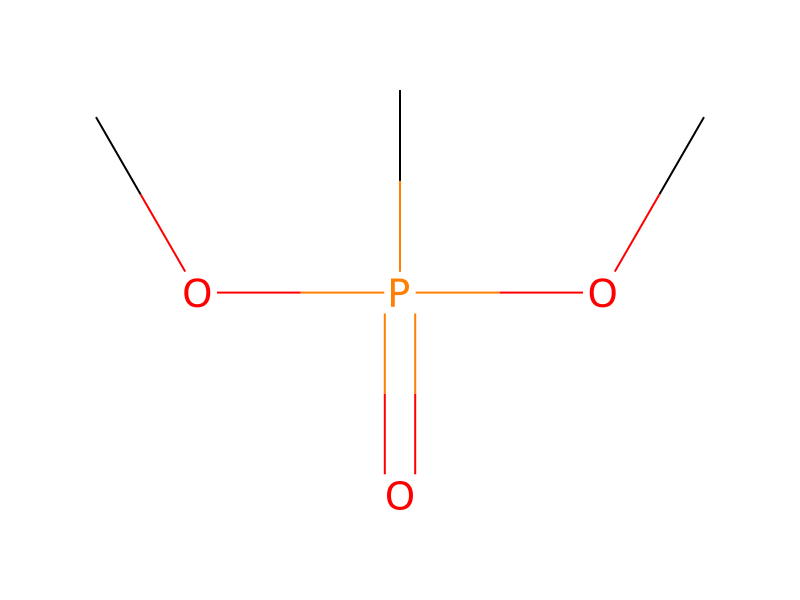
[CH3:1][P:2](=[O:7])([O:5][CH3:6])[O:3][CH3:4].P(=O)([O-])[O-].C([Li])CCC.[C:17]1([CH2:23][C:24](OC)=[O:25])[CH:22]=[CH:21][CH:20]=[CH:19][CH:18]=1>O1CCCC1.CCCCCC.C(O)(=O)C>[O:25]=[C:24]([CH2:23][C:17]1[CH:22]=[CH:21][CH:20]=[CH:19][CH:18]=1)[CH2:1][P:2](=[O:7])([O:5][CH3:6])[O:3][CH3:4]Participants







Procedure
A solution of 6.2 g (50 mmoles) dimethyl methylphosphonate (Aldrich) in 125 ml dry tetrahydrofuran was cooled to -78° in a dry nitrogen atmosphere. To the stirred phosphonate solution was added 21 ml of 2.37 M n-butyllithium in hexane solution (Alfa Inorganics, Inc.) dropwise over a period of 18 minutes at such a rate that the reaction temperature never rose above -65°. After an additional 5 minutes stirring at -78°, 7.5 g (50.0 mmole) methyl phenylacetate was added dropwise at a rate that kept the reaction temperature less than -70° (20 minutes) After 3.5 hours at -78°, the reaction mixture was allowed to warm to ambient temperature, neutralized with 6 ml acetic acid and rotary evaporated (water aspirator) to a white gel. The gelatinous material was taken up in 75 ml water, the aqueous phase extracted with 100 ml portions of chloroform (3 x), the combined organic extracts were backwashed (50 ml H2O), dried (MgSO4), and concentrated in vacuo to a crude residue and distilled, b.p. 134°-5° (<0.1 mm) to give 3.5 g (29% dimethyl 2-oxo-3-phenylpropylphosphonate).
Workup
- customthe reaction temperature less than -70° (20 minutes)
- customAfter 3.5 hours
- customat -78°
- customrotary evaporated (water aspirator) to a white gel
- extractionthe aqueous phase extracted with 100 ml portions of chloroform (3 x)
- dry with materialdried (MgSO4)
- concentrationconcentrated in vacuo to a crude residue
- distillationdistilled
Sources & evidence
- ORD record
- ord-d849300e99194ab58834d1d185837d70
- Source dataset
- uspto-grants-1977_04
- Patent number
- US04018892
Reaction notes
Loading…