4-Toluenesulfonyl chloride → HCID 13720819, compound
Reaction equation

[NH:1]1[C:9]2[C:4](=[CH:5][CH:6]=[C:7]([C:10]([O:12][CH3:13])=[O:11])[CH:8]=2)[CH:3]=[CH:2]1.[CH3:14][C:15]1[CH:20]=[CH:19][C:18]([S:21](Cl)(=[O:23])=[O:22])=[CH:17][CH:16]=1.C(=O)([O-])[O-].[K+].[K+]>CC(=O)CC>[CH3:14][C:15]1[CH:20]=[CH:19][C:18]([S:21]([N:1]2[C:9]3[C:4](=[CH:5][CH:6]=[C:7]([C:10]([O:12][CH3:13])=[O:11])[CH:8]=3)[CH:3]=[CH:2]2)(=[O:23])=[O:22])=[CH:17][CH:16]=1Participants
5
Reactant 3


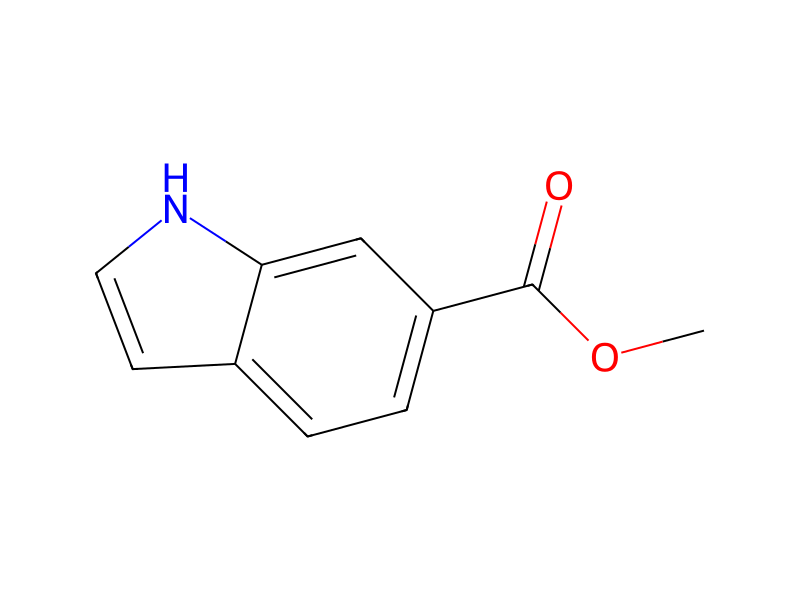
Product 1

Reagents, catalysts & solvents 1

Procedure
A solution of methyl indole-6-carboxylate (15.0 g) in 2-butanone (214 ml) was treated with 4-methylbenzenesulfonylchloride (33 g) and potassium carbonate (47.0 g) and heated to reflux under a nitrogen atmosphere for 18 hours. The hot reaction mixture was filtered, and the filtrate was evaporated to give a solid which was triturated with ether to give methyl 1-(4-methylphenylsulfonyl)indole-6-carboxylate (28.0 g, 99%) as an ivory solid NMR (80 MHz, CDC3): 2.33(s, 3H, ArCH3), 3.95(s, 3H, OCH3), 6.67(dd, 1H, H3-indole), 7.16-7.98(7H, m, Ar), 8.7(m, 1H, H7 -indole)
Workup
- temperatureheated
- temperatureto reflux under a nitrogen atmosphere for 18 hours
- filtrationThe hot reaction mixture was filtered
- customthe filtrate was evaporated
- customto give a solid which
- customwas triturated with ether
Sources & evidence
- ORD record
- ord-e19d6fe056cd4c2cab8ca936f2df908f
- Source dataset
- uspto-grants-1990_01
- Patent number
- US04894386
Reaction notes
Loading…