Water → HCID 66987908, compound
Reaction equation

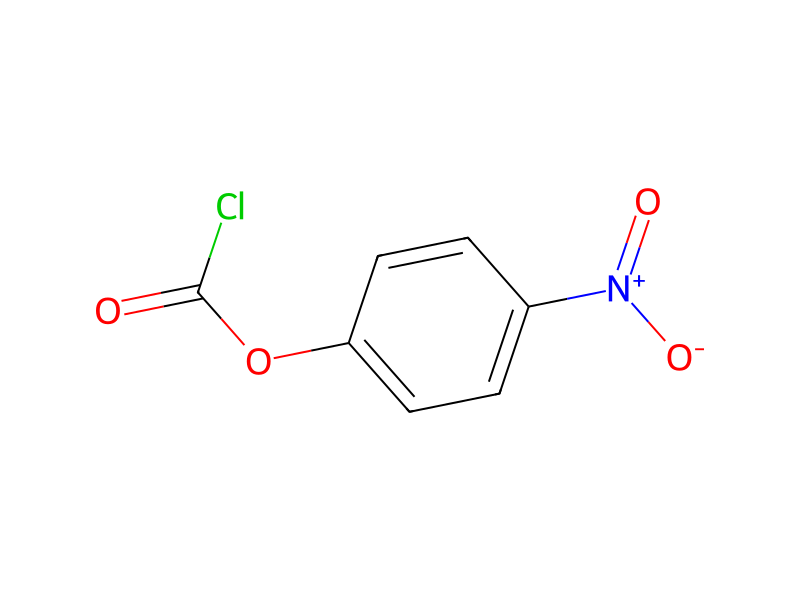
[NH2:1][C@@H:2]([CH2:7][C:8]1[CH:13]=[CH:12][C:11]([O:14][CH3:15])=[CH:10][CH:9]=1)[C:3]([O:5][CH3:6])=[O:4].O.Cl[C:18]([O:20][C:21]1[CH:26]=[CH:25][C:24]([N+:27]([O-:29])=[O:28])=[CH:23][CH:22]=1)=[O:19].C(N(C(C)C)CC)(C)C>ClCCl>[CH3:15][O:14][C:11]1[CH:10]=[CH:9][C:8]([CH2:7][C@H:2]([NH:1][C:18]([O:20][C:21]2[CH:22]=[CH:23][C:24]([N+:27]([O-:29])=[O:28])=[CH:25][CH:26]=2)=[O:19])[C:3]([O:5][CH3:6])=[O:4])=[CH:13][CH:12]=1Participants
6
Reactant 4



Product 1

Reagents, catalysts & solvents 1

Procedure
1 g (4.8 mmol) of methyl(S)-2-amino-3-(4-methoxyphenyl)propionate (cf. preparation 2-1) is diluted in 30 mL of dichloromethane. The solution is cooled in a bath of cold water, and 1.4 g (7.2 mmol) of 4-nitrophenyl chloroformate and 1.2 mL (7.2 mmol) of diisopropylethylamine are then added. After warming to room temperature, the reaction medium is stirred for 2 hours. The solution is poured into water and then extracted with dichloromethane. The organic phase is dried and then evaporated. The crude product obtained is used in the following step without further purification.
Workup
- additionare then added
- extractionextracted with dichloromethane
- customThe organic phase is dried
- customevaporated
Sources & evidence
- ORD record
- ord-9f75dd7f3bcd41df80f6a154aeb2408b
- Source dataset
- uspto-grants-2014_11
- Patent number
- US08877968B2
Reaction notes
Loading…