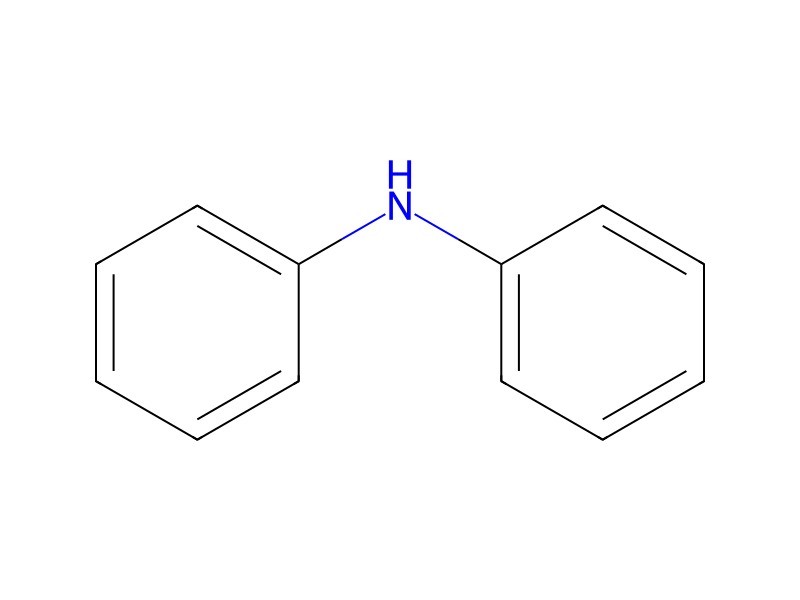
Diphenylamine → HCID 266861, compound
Reaction equation

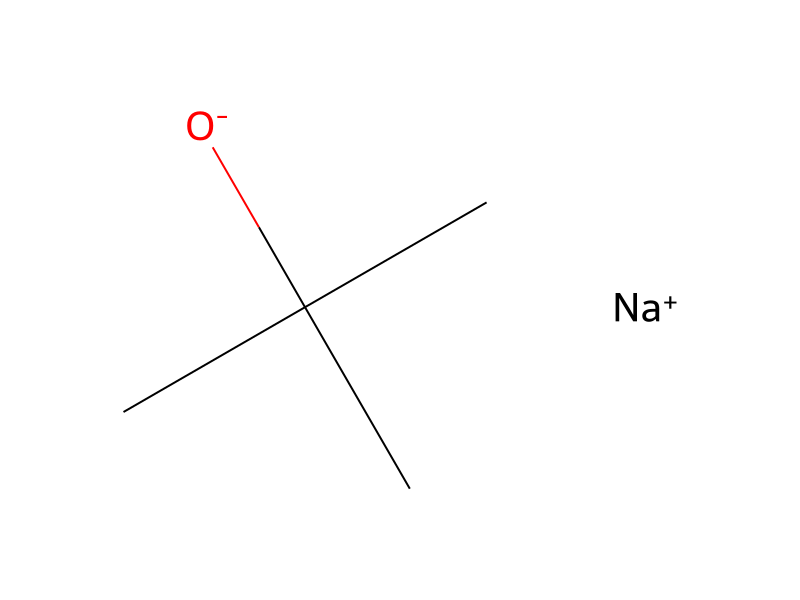
[C:1]1([NH:7][C:8]2[CH:13]=[CH:12][CH:11]=[CH:10][CH:9]=2)[CH:6]=[CH:5][CH:4]=[CH:3][CH:2]=1.I[C:15]1[CH:20]=[CH:19][CH:18]=[C:17]([N+:21]([O-:23])=[O:22])[CH:16]=1.CC(C)([O-])C.[Na+]>C([O-])(=O)C.[Pd+2].C([O-])(=O)C.C1(C)C=CC=CC=1>[N+:21]([C:17]1[CH:16]=[C:15]([CH:20]=[CH:19][CH:18]=1)[N:7]([C:8]1[CH:9]=[CH:10][CH:11]=[CH:12][CH:13]=1)[C:1]1[CH:6]=[CH:5][CH:4]=[CH:3][CH:2]=1)([O-:23])=[O:22]Participants
6
Reactant 3

Product 1

Reagents, catalysts & solvents 2


Procedure
A 1 L round bottom flask was charged with diphenylamine (13.29 g, 79.0 mmol), 1-iodo-3-nitrobenzene (19.56 g, 79.0 mmol), palladium (II) acetate (0.70 g, 3.12 mmol), biphenyl-2-dicyclohexylphosphine (2.19 g, 6.25 mmol), sodium tert-butoxide (10.48 g, 109 mmol) and toluene (400 mL). This was stirred at reflux for 18 h. The mixture was then filtered. The filtrate was concentrated in vacuo, and the crude product was chromatographed (silica gel) using a gradient of 10-20% dichloromethane in hexane to give 3-nitro-N,N-diphenylaniline (14.15 g, 62%) as an orange solid.
Workup
- temperatureat reflux for 18 h
- filtrationThe mixture was then filtered
- concentrationThe filtrate was concentrated in vacuo
- customthe crude product was chromatographed (silica gel)
Sources & evidence
- ORD record
- ord-e33ac8d3f69b4292a2b02b377397c317
- Source dataset
- uspto-grants-2014_11
- Patent number
- US08883322B2
Reaction notes
Loading…