Dichloromethane → Didodecyl 2-(thiophen-3-yl)malonate
Reaction equation
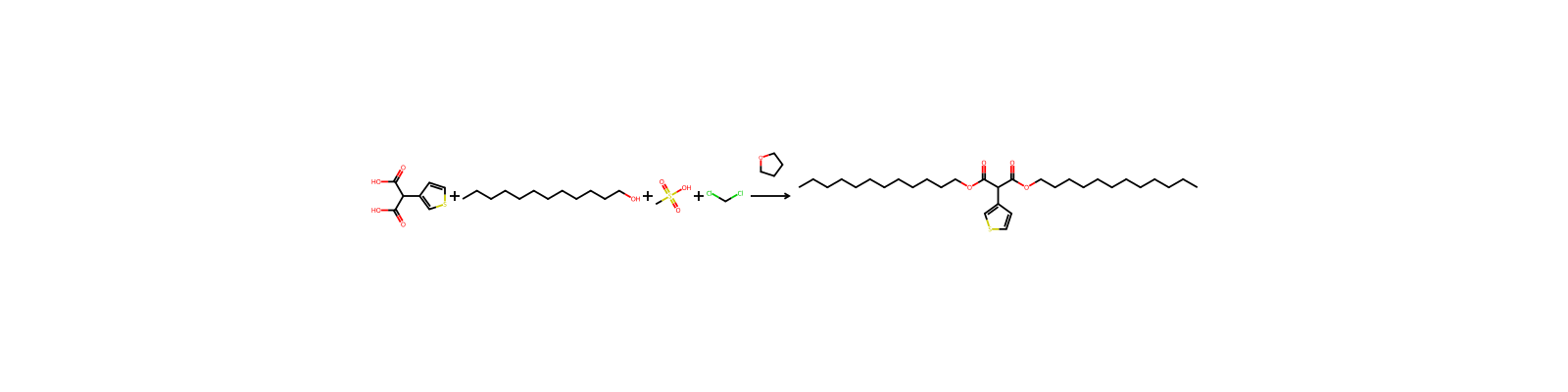
[S:1]1[CH:5]=[CH:4][C:3]([CH:6]([C:10]([OH:12])=[O:11])[C:7]([OH:9])=[O:8])=[CH:2]1.[CH2:13](O)[CH2:14][CH2:15][CH2:16][CH2:17][CH2:18][CH2:19][CH2:20][CH2:21][CH2:22][CH2:23][CH3:24].CS(O)(=O)=O.C(Cl)Cl>C1COCC1>[S:1]1[CH:5]=[CH:4][C:3]([CH:6]([C:7]([O:9][CH2:24][CH2:23][CH2:22][CH2:21][CH2:20][CH2:19][CH2:18][CH2:17][CH2:16][CH2:15][CH2:14][CH3:13])=[O:8])[C:10]([O:12][CH2:13][CH2:14][CH2:15][CH2:16][CH2:17][CH2:18][CH2:19][CH2:20][CH2:21][CH2:22][CH2:23][CH3:24])=[O:11])=[CH:2]1Participants
6




Procedure
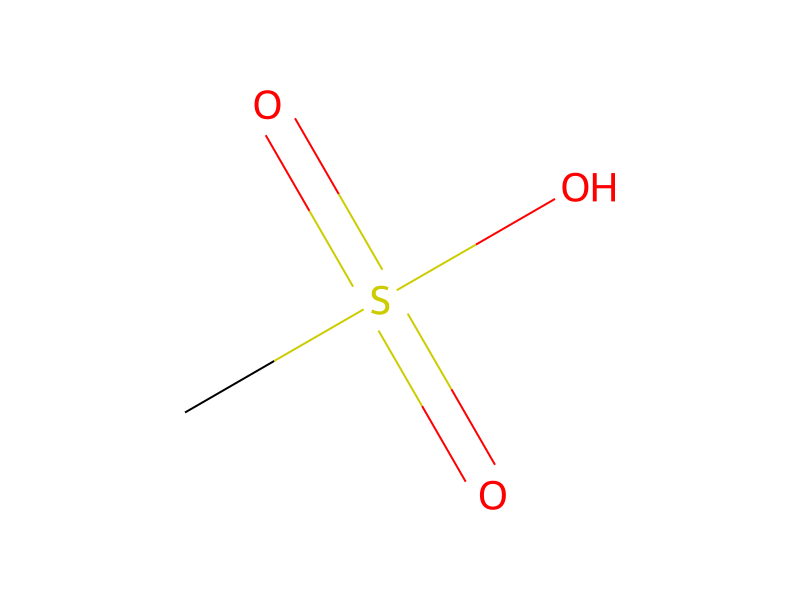
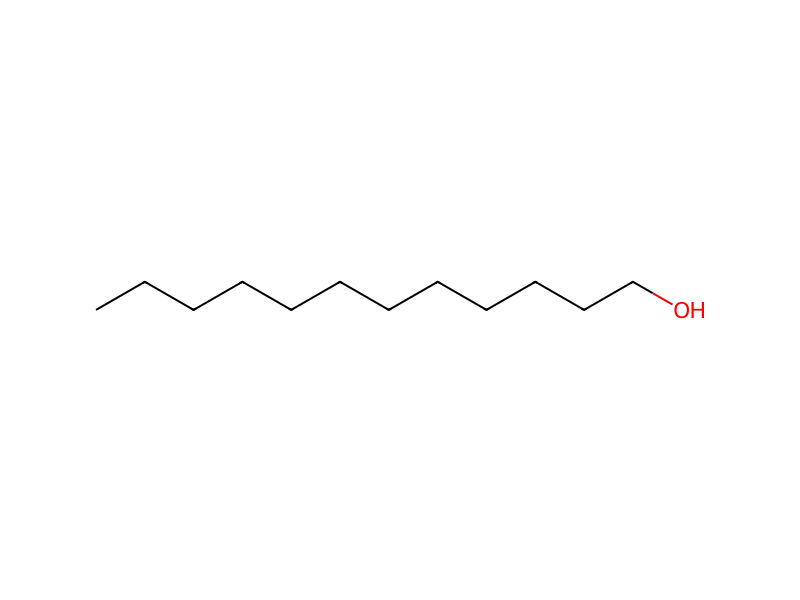
In a one-necked flask, 3-thienylmalonic acid (10.0 g, 53.7 mmol) and 1-dodecanol (4 eq., 40.0 g, 215 mmol) were dissolved in THF (80 mL) at room temperature. To this solution was added methanesulphonic acid (1.99 g, 20.7 mmol). The reaction mixture was stirred at room temperature for 3 days. The solvent was then evaporated at 40° C. The residue was re-dissolved in CH2Cl2 to form a solution, which was loaded onto a column (eluent: CH2Cl2) to give didodecyl 2-(thiophen-3-yl)malonate (yield: 18.0 g, 69%). 1H NMR (CDCl3): 0.9 (6H, t), 1.3 (36H, m), 1.7 (4H, m), 4.2 (4H, t), 4.8 (1H, s), 7.2 (1H, d), 7.3 (1H, d), 7.4 (1H, s).
Workup
- customThe solvent was then evaporated at 40° C
- dissolutionThe residue was re-dissolved in CH2Cl2
- customto form a solution, which
Sources & evidence
- ORD record
- ord-c14abc847f884fe880e957398e1c90c8
- Source dataset
- uspto-grants-2014_11
- Patent number
- US08883954B2
Reaction notes
Loading…