Levulinic Acid → Indole
Reaction equation

Cl.F[C:3]1[CH:4]=[C:5]([NH:11]N)[C:6](OC)=[CH:7][CH:8]=1.[C:13](O)(=O)[CH2:14]CC(C)=O>C(O)(=O)C>[NH:11]1[C:5]2[C:6](=[CH:7][CH:8]=[CH:3][CH:4]=2)[CH:14]=[CH:13]1Participants
4
Reactant 2

Product 1

Reagents, catalysts & solvents 1

Procedure
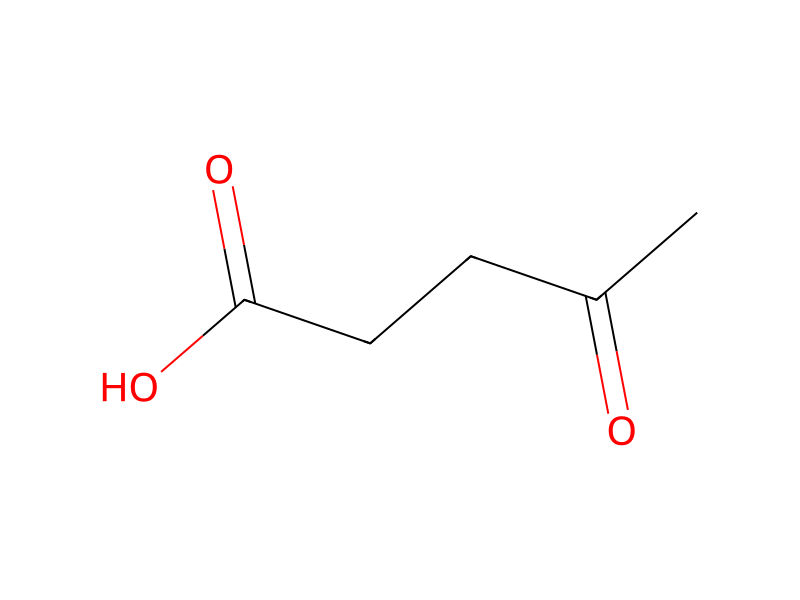
Condensation of hydrazine hydrochloride (2) with levulinic acid (3) in acetic acid results in the formation of two regioisomeric indole derivatives 4 and 5 in a 1:7 ratio. The major regioisomer 5 can be isolated in pure form by crystallization of the reaction mixture. Alternatively, the indole mixture can be esterified with an alcohol such as 2-trimethylsilylethanol to afford the corresponding esters that can then be separated by a number of means, for example by chromatography.
Sources & evidence
- ORD record
- ord-aac2f077b3c74ae2b4034b72935d9923
- Source dataset
- uspto-grants-2014_11
- Patent number
- US08884020B2
Reaction notes
Loading…