Tetrahydrofuran → HCID 67383180, compound
Reaction equation

[Br:1][C:2]1[CH:15]=[C:14]2[C:5]([O:6][C:7]3[C:8]([F:20])=[C:9]([F:19])[C:10]([O:17][CH3:18])=[CH:11][C:12]=3[C:13]2=O)=[CH:4][CH:3]=1.[CH2:21]1COCC1.C[Mg]Cl>CC(=O)OCC>[Br:1][C:2]1[CH:15]=[C:14]2[C:5]([O:6][C:7]3[C:8]([F:20])=[C:9]([F:19])[C:10]([O:17][CH3:18])=[CH:11][C:12]=3[C:13]2=[CH2:21])=[CH:4][CH:3]=1Participants
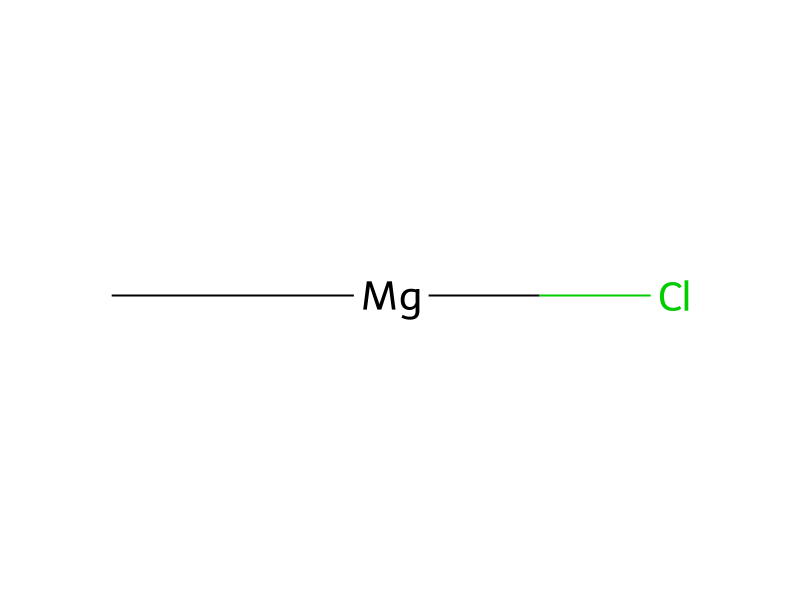
Reactant 3


Product 1

Reagents, catalysts & solvents 1

Conditions
- Temperature
- -10 °C
Procedure
A solution of 7-bromo-3,4-difluoro-2-methoxy-9H-xanthen-9-one (8.25 g, 24.19 mmol) in THF (242 mL, 24.19 mmol) was cooled to −40° C. To the resulting slurry was added methylmagnesium chloride, 3.0 M solution in tetrahydrofuran (24.19 mL, 72.6 mmol), leading to the formation of a slightly darker mixture. After slowly warming to −10° C. over the course of 30 min TLC showed the clean conversion to a slightly more polar product (1:1 EA in hexanes). The reaction was removed from the cold bath and quenched with saturated ammonium chloride (500 mL). This mixture was poured into a separatory funnel containing ethyl acetate (500 mL). The layers were separated and the aqueous layer was extracted with ethyl acetate (3×100 mL). The combined organic layers were washed with 200 mL of 10% citric acid then brine, dried over sodium sulfate, filtered and concentrated in vacuo to provide 7-bromo-3,4-difluoro-2-methoxy-9-methylene-9H-xanthene as a bright yellow solid that was used immediately. To a solution of iodine (8.98 g, 35.4 mmol) in 150 mL of THF at −25° C. was added silver cyanate (15.91 g, 106 mmol). The reaction was maintained at this temperature for 15 min at which time a solution of 7-bromo-3,4-difluoro-2-methoxy-9-methylene-9H-xanthene (12.0 g, 35.4 mmol) in 3 mL of THF was added. The reaction temperature rose to −15° C. during this addition. The reaction was maintained at −25° C. for 45 min at which time ammonia, 2.0 M solution in 2-propanol (106 mL, 212 mmol) was added. The reaction was allowed to warm to rt and was maintained at that temperature overnight. The reaction was filtered through a pad of celite, washing well with ethyl acetate. This solution was diluted with 10% sodium thiosulfate (1000 mL) and poured into a separatory funnel containing ethyl acetate (500 mL). The layers were separated and the aqueous layer was extracted with ethyl acetate (2×500 mL). The combined organic layers were washed with brine, dried over sodium sulfate, filtered and concentrated in vacuo to provide a light yellow foam. This solid was suspended in 100 mL of CH2Cl2 and 100 mL of ether was added. The slurry was filtered to provide 6.0 g of a light yellow solid. The filtrate was concentrated and purified by silica gel chromatography (Redi-Sep pre-packed silica gel column (330 g), 0-100% CH2Cl2 to 10:1 methanol in CH2Cl2 with 0.1% ammonium hydroxide) to provide 7′-bromo-3′,4′-difluoro-2′-methoxy-5H-spiro[oxazole-4,9′-xanthen]-2-amine as an orange solid (7.85 g).
Workup
- customThe reaction was removed from the cold bath
- customquenched with saturated ammonium chloride (500 mL)
- additionThis mixture was poured into a separatory funnel
- additioncontaining ethyl acetate (500 mL)
- customThe layers were separated
- extractionthe aqueous layer was extracted with ethyl acetate (3×100 mL)
- washThe combined organic layers were washed with 200 mL of 10% citric acid
- dry with materialbrine, dried over sodium sulfate
- filtrationfiltered
- concentrationconcentrated in vacuo
Sources & evidence
- ORD record
- ord-08521022bee04f11ac84286c0b3f92e5
- Source dataset
- uspto-grants-2014_11
- Patent number
- US08883782B2
Reaction notes
Loading…