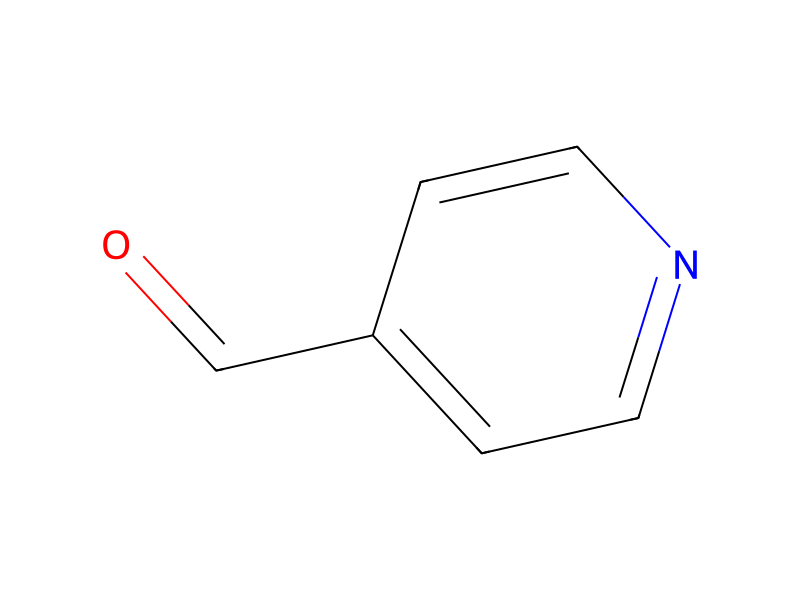
4-Pyridinecarboxaldehyde → 5,7-Dimethoxy-2-(pyridin-4-yl)quinazolin-4(3H)-one
Reaction equation

[NH2:1][C:2]1[CH:10]=[C:9]([O:11][CH3:12])[CH:8]=[C:7]([O:13][CH3:14])[C:3]=1[C:4]([NH2:6])=[O:5].[N:15]1[CH:20]=[CH:19][C:18]([CH:21]=O)=[CH:17][CH:16]=1.COC1C=C(OC)C=C2C=1C(=O)NC(C1C=CC=CN=1)=N2>>[CH3:14][O:13][C:7]1[CH:8]=[C:9]([O:11][CH3:12])[CH:10]=[C:2]2[C:3]=1[C:4](=[O:5])[NH:6][C:21]([C:18]1[CH:19]=[CH:20][N:15]=[CH:16][CH:17]=1)=[N:1]2Participants
4


Procedure
5,7-Dimethoxy-2-(pyridin-4-yl)quinazolin-4(3H)-one was synthesized from 2-amino-4,6-dimethoxybenzamide and 4-pyridine carboxaldehyde, using the method described for 5,7-dimethoxy-2-(pyridin-2-yl)quinazolin-4(3H)-one. 5,7-Dimethoxy-2-(pyridin-4-yl)quinazolin-4(3H)-one (142 mg, 63%) was isolated as a pale brown solid and then converted to the corresponding hydrochloride (yellow solid). Selected data: MS (m/z): 284.06; MP 294-295° C. (hydrochloride).
Sources & evidence
- ORD record
- ord-6bb2fdc6592f4424972eaa035f488988
- Source dataset
- uspto-grants-2014_11
- Patent number
- US08889698B2
Reaction notes
Loading…