Methoxymethyl-triphenylphosphonium chloride → 2,6-Diisopropyl-4-bromo-3-methoxystyrene
Reaction equation

[Cl-].[CH3:2][O:3]C[P+](C1C=CC=CC=1)(C1C=CC=CC=1)C1C=CC=CC=1.[CH3:24][Si](C)(C)[N-][Si](C)(C)C.[Li+].[CH:34]([C:37]1[CH:44]=[C:43]([Br:45])[CH:42]=[C:41]([CH:46]([CH3:48])[CH3:47])[C:38]=1[CH:39]=O)([CH3:36])[CH3:35]>C1COCC1>[CH:34]([C:37]1[C:44]([O:3][CH3:2])=[C:43]([Br:45])[CH:42]=[C:41]([CH:46]([CH3:48])[CH3:47])[C:38]=1[CH:39]=[CH2:24])([CH3:36])[CH3:35]Participants

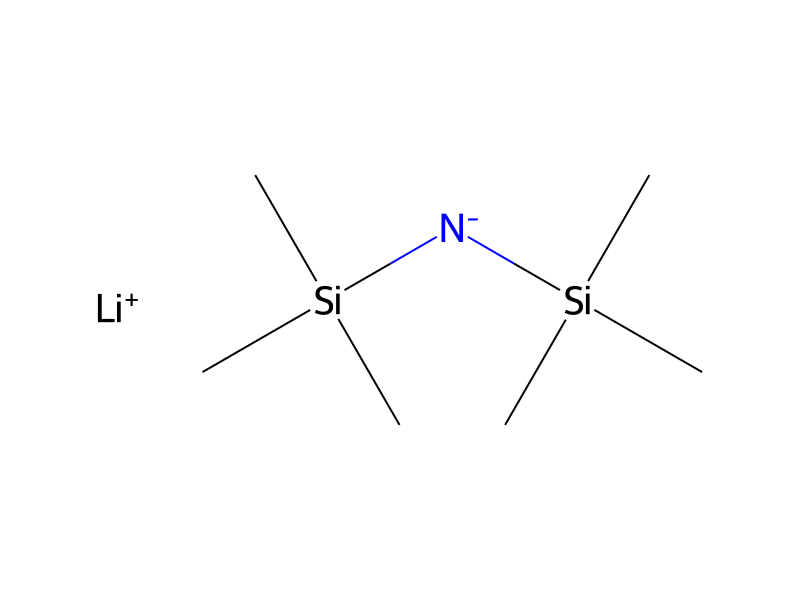



Conditions
- Temperature
- 0 °C
Procedure
Methoxymethyl triphenylphosphonium chloride (18.68 g, 54.5 mmol) was suspended in 200 mL of THF at −78° C. Lithium hexamethyldisilazide (1.0 M in THF, 50 mL) was added dropwise. The resulting mixture was warmed up to 0° C. with stirring. After cooling the solution to −78° C., 2,6-diisopropyl-4-bromobenzaldehyde (11.5 g, 42.7 mmol) in 20 mL of THF was added dropwise. The mixture was slowly warmed up to room temperature and continually stirred overnight. After regular work up, the crude product was distilled at 165° C. under vacuum to afford 2,6-diisopropyl-4-bromo-3-methoxystyrene (10 g). This product was dissolved in 20 mL of dioxane and 100 mL of 18% HCl solution and refluxed at 100° C. for 6 h. After regular work up, the crude product was distilled at 160° C. under vacuum to afford 2,6-diisopropyl-4-bromophenylacetaldehyde (7.5 g).
Workup
- temperatureAfter cooling the solution to −78° C.
- temperatureThe mixture was slowly warmed up to room temperature and continually stirred overnight
- distillationAfter regular work up, the crude product was distilled at 165° C. under vacuum
Sources & evidence
- ORD record
- ord-8321b48642ee46c3a50c0dbff36336a8
- Source dataset
- uspto-grants-2014_11
- Patent number
- US08889864B2
Reaction notes
Loading…