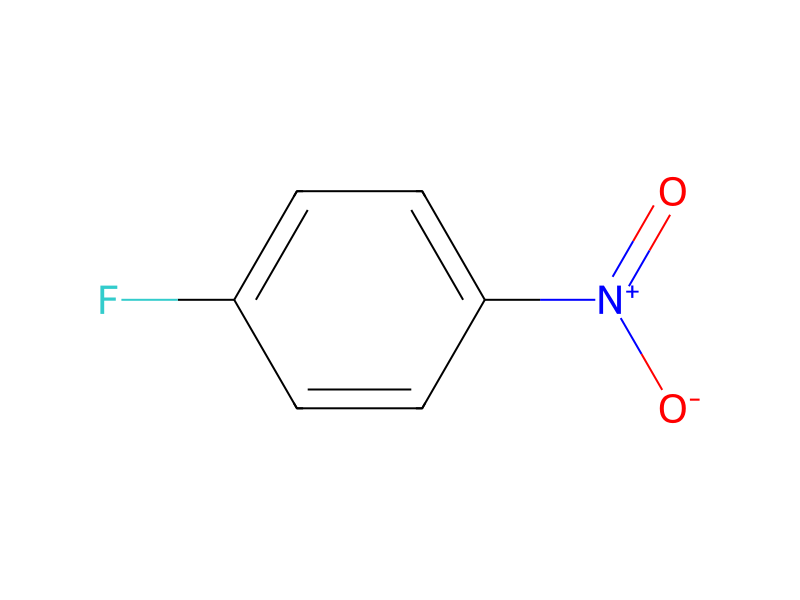
p-Fluoronitrobenzene → HCID 86695865, compound
Reaction equation

Cl.[CH2:2]1[C:11]2[C:6](=[CH:7][CH:8]=[N:9][CH:10]=2)[CH2:5][CH2:4][NH:3]1.F[C:13]1[CH:18]=[CH:17][C:16]([N+:19]([O-:21])=[O:20])=[CH:15][CH:14]=1.C(=O)([O-])[O-].[K+].[K+]>CN(C=O)C>[N+:19]([C:16]1[CH:17]=[CH:18][C:13]([N:9]2[CH2:8][CH2:7][C:6]3[C:11](=[CH:2][N:3]=[CH:4][CH:5]=3)[CH2:10]2)=[CH:14][CH:15]=1)([O-:21])=[O:20]Participants
5




Procedure
Commercially available 1,2,3,4-tetrahydro-2,7-naphthyridine hydrochloride (14.5 g; 0.085 moles), 4-fluoronitrobenzene (18.0 g; 0.13 moles) and potassium carbonate (37.5 g, 0.27 moles) in anhydrous DMF (100 mL) were heated at 80° C. for 18 hours, cooled and partitioned between ethyl acetate (500 mL) and water (1 L). The layers were separated and the aqueous layer re-extracted with ethyl acetate (300 mL). The combined organic layers were washed with water (400 mL), brine, dried over sodium sulfate and evaporated in vacuo. Chromatography of the residue on silica (250 g) eluting with 20% ethyl acetate in DCM then 7.5% methanol in ethyl acetate gave the title compound (15 g) as an orange solid.
Workup
- temperaturecooled
- custompartitioned between ethyl acetate (500 mL) and water (1 L)
- customThe layers were separated
- extractionthe aqueous layer re-extracted with ethyl acetate (300 mL)
- washThe combined organic layers were washed with water (400 mL), brine
- dry with materialdried over sodium sulfate
- customevaporated in vacuo
- washChromatography of the residue on silica (250 g) eluting with 20% ethyl acetate in DCM
Sources & evidence
- ORD record
- ord-60224e2c52fe499d80a5eee01496dc1f
- Source dataset
- uspto-grants-2014_11
- Patent number
- US08889870B2
Reaction notes
Loading…