Potassium Carbonate → 8-Fluoro-7-(2-methoxyethoxy)-2-methylquinoline
Reaction equation

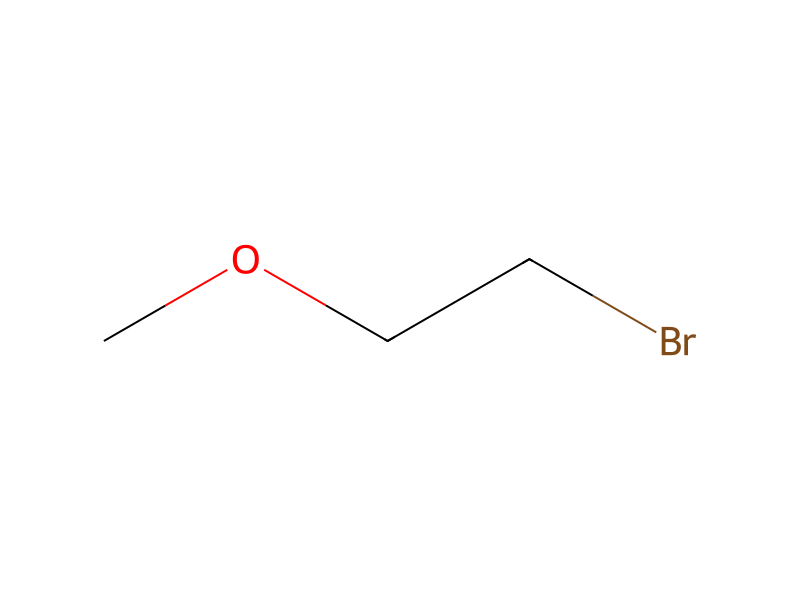
[F:1][C:2]1[C:3]([OH:13])=[CH:4][CH:5]=[C:6]2[C:11]=1[N:10]=[C:9]([CH3:12])[CH:8]=[CH:7]2.C(=O)([O-])[O-].[K+].[K+].Br[CH2:21][CH2:22][O:23][CH3:24]>CC(C)=O>[F:1][C:2]1[C:3]([O:13][CH2:21][CH2:22][O:23][CH3:24])=[CH:4][CH:5]=[C:6]2[C:11]=1[N:10]=[C:9]([CH3:12])[CH:8]=[CH:7]2Participants
5
Reactant 3


Product 1

Reagents, catalysts & solvents 1

Conditions
- Temperature
- 70 °C
Procedure
To a mixture of 8-fluoro-2-methylquinolin-7-ol (0.30 g, 1.69 mmol) and potassium carbonate (0.70 mg, 5.08 mmol) in acetone (7 mL) was added 1-bromo-2-methoxyethane (0.47 g, 3.39 mmol) and the mixture heated at 70° C. for 18 hours. Additional bromo-2-methoxyethane (0.150 mL) and potassium carbonate (0.35 g) were added and heating was continued for 16 hours. The mixture was partitioned between water and ethyl acetate and the layers were separated. The organic layer was dried (MgSO4), filtered and concentrated under reduced pressure. The residue was purified by column chromatography (Biotage, 25M; 25% ethyl acetate:hexanes) to afford 8-fluoro-7-(2-methoxyethoxy)-2-methylquinoline (0.217 g, 54%).
Workup
- temperatureheating
- customThe mixture was partitioned between water and ethyl acetate
- customthe layers were separated
- dry with materialThe organic layer was dried (MgSO4)
- filtrationfiltered
- concentrationconcentrated under reduced pressure
- customThe residue was purified by column chromatography (Biotage, 25M; 25% ethyl acetate:hexanes)
Sources & evidence
- ORD record
- ord-be6da6fc5ee34d0b8a65eb10491e6dd4
- Source dataset
- uspto-grants-2014_11
- Patent number
- US08889704B2
Reaction notes
Loading…