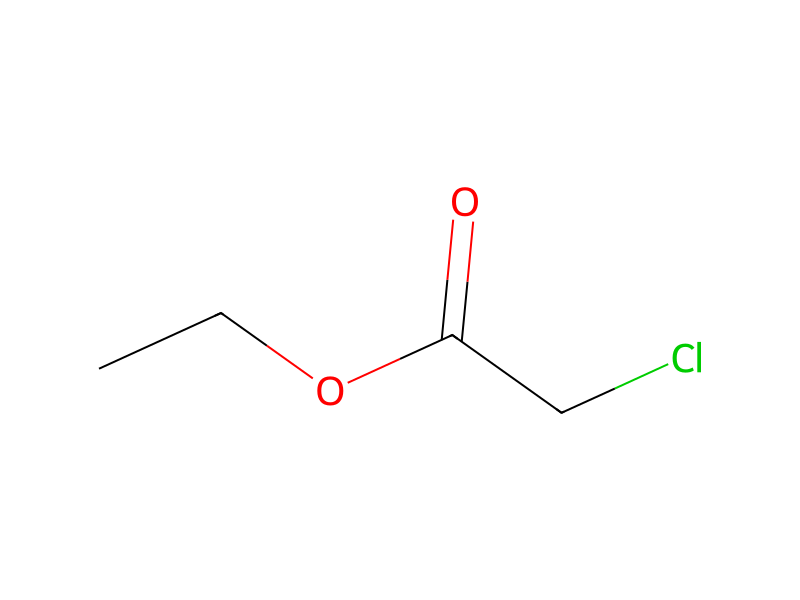
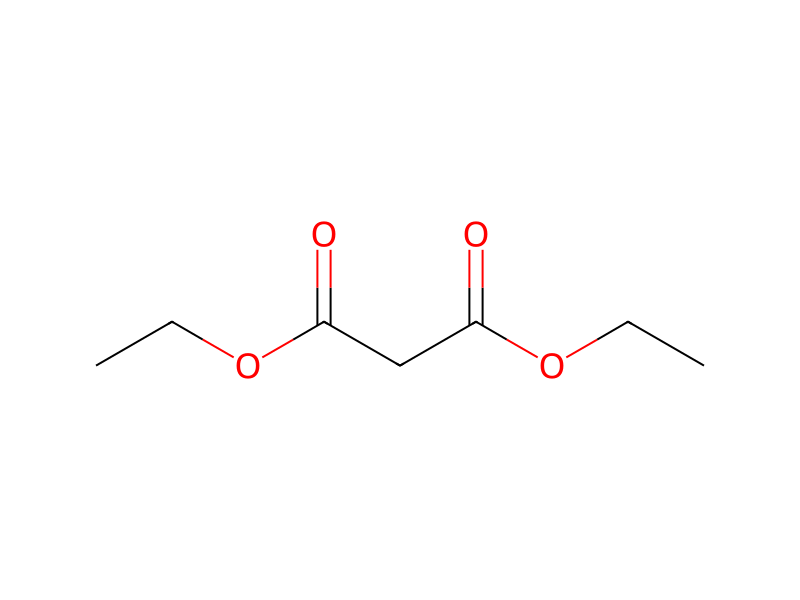
Ethyl chloroacetate → Triethyl ethane-1,1,2-tricarboxylate
Reaction equation

[Na].[C:2]([O:10][CH2:11][CH3:12])(=[O:9])[CH2:3][C:4]([O:6][CH2:7][CH3:8])=[O:5].Cl[CH2:14][C:15]([O:17][CH2:18][CH3:19])=[O:16]>C(O)C.O>[CH:3]([C:4]([O:6][CH2:7][CH3:8])=[O:5])([C:2]([O:10][CH2:11][CH3:12])=[O:9])[CH2:14][C:15]([O:17][CH2:18][CH3:19])=[O:16]Participants
Reactant 3

Product 1

Reagents, catalysts & solvents 2


Conditions
- Temperature
- 15 °C
Procedure
Sodium metal (23 gram, 1 mole) was dissolved in dry ethanol (500 ml) with stirring. To this 160 gram (1 mole) of diethyl malonate (compound [2]) was added in 30 minutes. The reaction mixture was cooled to 15° C. and ethyl chloroacetate (compound [1], 117 gm, 0.095 mole) was then added drop wise in 30 minutes. On completion of addition the reaction mass was refluxed for 6 hours and then poured in 2 liters of water. The organic materials were extracted with dichloromethane (three times with 500 ml). Next, the organic extracts were dried over sodium sulfate, filtered and evaporated to give an oily substance which was then vacuum distilled to give 220 gm (89% of the theoretical maximum yield) of triethyl ethane-1,1,2-tricarboxylate, compound [3].
Workup
- additionOn completion of addition the reaction mass
- temperaturewas refluxed for 6 hours
- extractionThe organic materials were extracted with dichloromethane (three times with 500 ml)
- dry with materialNext, the organic extracts were dried over sodium sulfate
- filtrationfiltered
- customevaporated
- customto give an oily substance which
- distillationvacuum distilled
- customto give 220 gm (89% of the theoretical
Sources & evidence
- ORD record
- ord-86c9e29abcc54df4b18a6630f6d32b65
- Source dataset
- uspto-grants-2014_11
- Patent number
- US08889898B2
Reaction notes
Loading…