Dimethylformamide → Triethyl 4-methylpentane-1,2,2-tricarboxylate
Reaction equation

[H-].[Na+].CN(C)C=O.[CH:8]([C:20]([O:22][CH2:23][CH3:24])=[O:21])([C:15]([O:17][CH2:18][CH3:19])=[O:16])[CH2:9][C:10]([O:12][CH2:13][CH3:14])=[O:11].[CH2:25](Br)[CH:26]([CH3:28])[CH3:27]>O>[CH3:25][CH:26]([CH3:28])[CH2:27][C:8]([C:20]([O:22][CH2:23][CH3:24])=[O:21])([C:15]([O:17][CH2:18][CH3:19])=[O:16])[CH2:9][C:10]([O:12][CH2:13][CH3:14])=[O:11]Participants





Procedure
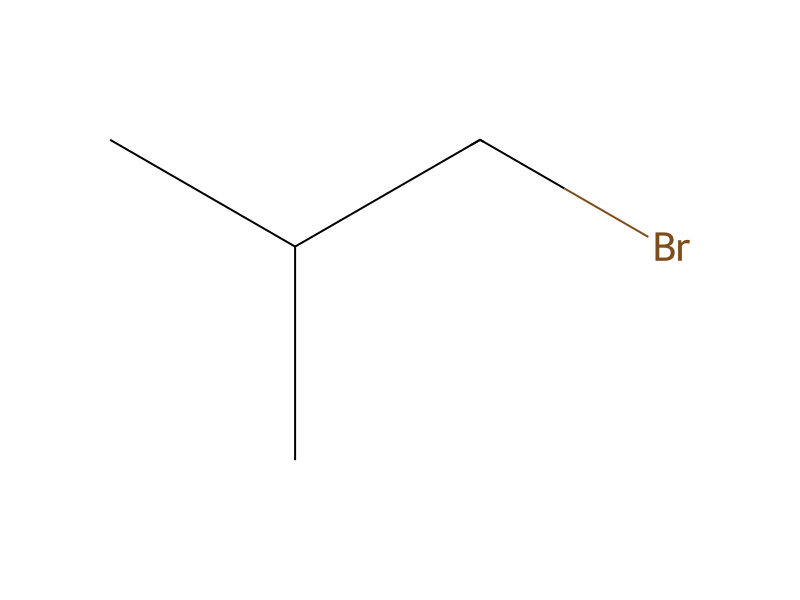
Sodium hydride (21 gram, 0.482 mole) was added to 200 ml dimethylformamide at 20° C. under nitrogen atmosphere. Then 80 grams (0.325 mole) of triethyl ethane-1,1,2-tricarboxylate (compound [3] made in example I) was added to the solution at a temperature of below 30° C. The reaction mixture was maintained at room temperature for 4 hours and 52 ml (0.482 mole) of isobutyl bromide (R2-X) was added drop wise after which the reaction mixture was stirred for another 20 hours at room temperature. When the reaction was complete 1 liter of cold water was added and the organic materials were extracted with dichloromethane (500 ml). The organic extracts were dried over sodium sulfate filtered and evaporated to give an oily substance, which was vacuum distilled to give 88 gram (89% of the theoretical maximum yield) triethyl 4-methylpentane-1,2,2-tricarboxylate, compound [4].
Workup
- additionwas added
- extractionthe organic materials were extracted with dichloromethane (500 ml)
- dry with materialThe organic extracts were dried over sodium sulfate
- filtrationfiltered
- customevaporated
- customto give an oily substance, which
- distillationdistilled
- customto give 88 gram (89% of the theoretical
Sources & evidence
- ORD record
- ord-e0c06348e0fe416695c8adaa9fd04713
- Source dataset
- uspto-grants-2014_11
- Patent number
- US08889898B2
Reaction notes
Loading…