3-Amino-1-propanol → HCID 59332899, compound
Reaction equation

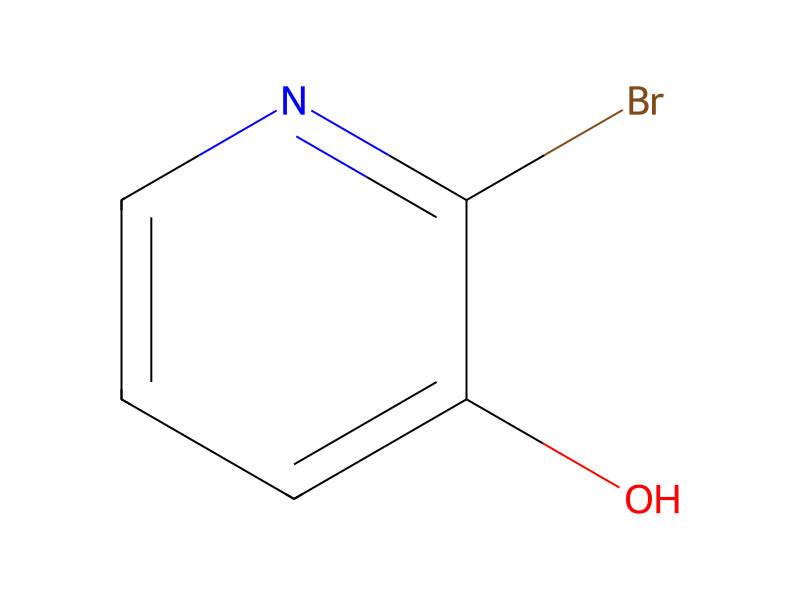
[N:1](C(OC(C)C)=O)=NC(OC(C)C)=O.[Br:15][C:16]1[C:21]([OH:22])=[CH:20][CH:19]=[CH:18][N:17]=1.[NH2:23][CH2:24][CH2:25][CH2:26]O.C1(P(C2C=CC=CC=2)C2C=CC=CC=2)C=CC=CC=1>O1CCOCC1>[NH3:1].[Br:15][C:16]1[C:21]([O:22][CH2:26][CH2:25][CH2:24][NH2:23])=[CH:20][CH:19]=[CH:18][N:17]=1Participants
7






Procedure
Diisopropyl azodicarboxylate (4.65 mL, 24 mmol) was added slowly to a dioxane (200 mL) solution of 2-bromo-pyridin-3-ol (3.50 g, 20 mmol), 3-aminopropanol (1.67 mL, 22 mmol) and triphenylphosphine (6.30 g, 24 mmol) at 10° C. After stirring the mixture for 30 mm at this temperature, it was refluxed for 18 h Upon cooling, the volatiles were evaporated and the residue was purified fey chromatography (silica, 3% MeOH in CH2Cl2 then 5% (2M NH3, m MeOH) in CH2Cl2 to afford the title compound (3.19 g, 69%). 1H NMR (300 MHz, CDCl3, δ): 7.98 (dd, J=4.5, 1.8 Hz, 1H), 7.23 (dd, J=4.5, 8.2 Hz, 1H), 7.15 (dd, J=1.8, 8.2 Hz, 1H), 4.15 (t, J=6.0 Hz, 2H), 2.98 (t, J=6.6 Hz, 2H), 2.00 (m, 2H). MS (ESI); m/e 231 and 233(M+H)+.
Workup
- temperaturewas refluxed for 18 h
- temperatureUpon cooling
- customthe volatiles were evaporated
- customthe residue was purified fey chromatography (silica, 3% MeOH in CH2Cl2
Sources & evidence
- ORD record
- ord-3589818dc5654e258cccf4f5d76d13f6
- Source dataset
- uspto-grants-2014_11
- Patent number
- US08895545B2
Reaction notes
Loading…