Dicyclohexylcarbodiimide → HCID 68513305, compound
Reaction equation

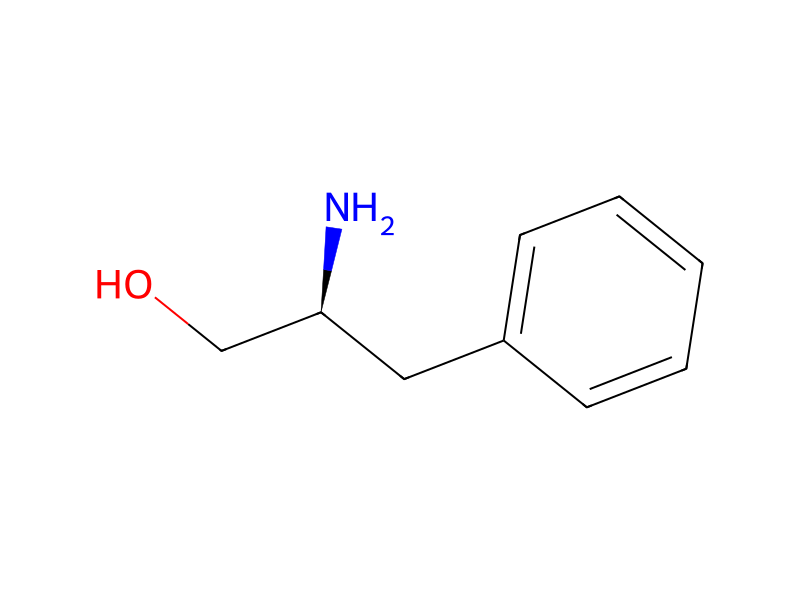
C1CCC(N=C=NC2CCCCC2)CC1.[N:16]1[CH:21]=[CH:20][C:19]([C:22]2[CH:30]=[CH:29][C:25]([C:26]([OH:28])=O)=[CH:24][CH:23]=2)=[CH:18][CH:17]=1.C1C=CC2N(O)N=NC=2C=1.CCN(C(C)C)C(C)C.[NH2:50][C@@H:51]([CH2:54][C:55]1[CH:60]=[CH:59][CH:58]=[CH:57][CH:56]=1)[CH2:52][OH:53]>CC(N(C)C)=O>[CH2:54]([C@H:51]([NH:50][C:26](=[O:28])[C:25]1[CH:24]=[CH:23][C:22]([C:19]2[CH:18]=[CH:17][N:16]=[CH:21][CH:20]=2)=[CH:30][CH:29]=1)[CH2:52][OH:53])[C:55]1[CH:60]=[CH:59][CH:58]=[CH:57][CH:56]=1Participants





Conditions
- Temperature
- 100 °C
Procedure
In a microwave vial containing 3 eq. of PS-DCC, 4-(pyridin-4-yl)benzoic acid (20 mg, 0.1 mmol) was added dissolved in DMA (1.0 ml). Then a solution of HOBT (14 mg, 0.1 mmol) dissolved in DMA (0.3 ml) was added followed by the addition of DIEA (36 μl, 0.2 mmol) dissolved in DMA (0.3 ml) and the addition of (S)-2-amino-3-phenylpropan-1-ol (17 mg, 0.11 mmol) dissolved in DMA (0.6 ml). The mixture was heated in the microwave to 100° C. for 600 seconds. The reaction was filtered through Si-Carbonate, 6 ml-1 g supplied by Silicycle chemical Division and transferred to 20 ml vials. The reaction was checked by LC/MS and concentrated to dryness. The residues were dissolved in 1:1 DMSO/MeOH and purified by reverse phase HPLC (TFA method). Product was characterized by 1H NMR, MS and LC/MS.
Workup
- additionwas added
- additionwas added
- filtrationThe reaction was filtered through Si-Carbonate, 6 ml-1 g
- concentrationconcentrated to dryness
- dissolutionThe residues were dissolved in 1:1 DMSO/MeOH
- custompurified by reverse phase HPLC (TFA method)
Sources & evidence
- ORD record
- ord-ffec783dbdbf47d7a5abb5b90d983cbc
- Source dataset
- uspto-grants-2014_11
- Patent number
- US08895749B2
Reaction notes
Loading…