Hydrochloric Acid → HCID 15532480, compound
Reaction equation

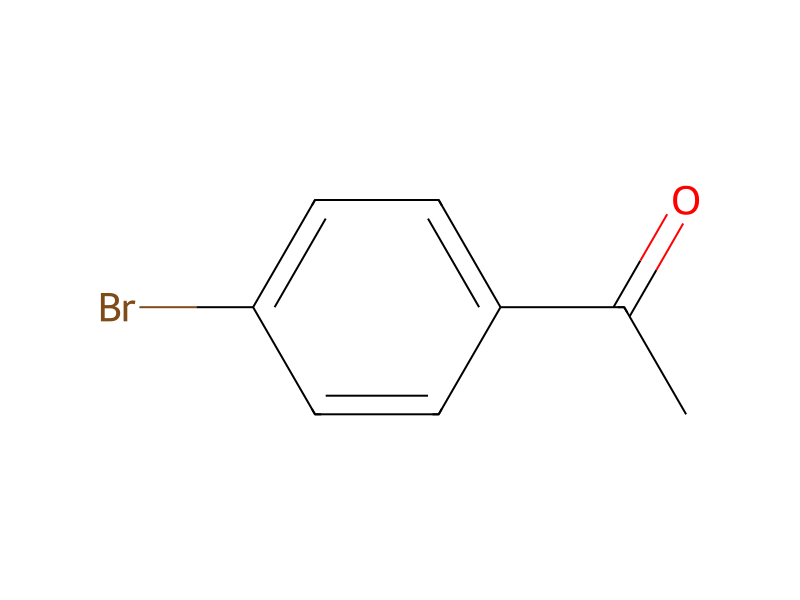
[CH3:1][C:2]([C:4]1[CH:9]=[CH:8][C:7](Br)=[CH:6][CH:5]=1)=[O:3].C([Sn](CCCC)(CCCC)[C:16]1[S:17][CH:18]=[CH:19][N:20]=1)CCC.C(Cl)(Cl)Cl.Cl>O1CCOCC1.Cl[Pd](Cl)([P](C1C=CC=CC=1)(C1C=CC=CC=1)C1C=CC=CC=1)[P](C1C=CC=CC=1)(C1C=CC=CC=1)C1C=CC=CC=1>[S:17]1[CH:18]=[CH:19][N:20]=[C:16]1[C:7]1[CH:8]=[CH:9][C:4]([C:2](=[O:3])[CH3:1])=[CH:5][CH:6]=1Participants






Conditions
- Temperature
- 90 °C
Procedure
4-Bromoacetophenone (500 mg, 2.51 mmol) and 2-(tributylstannyl)thiazole (0.948 ml, 3.014 mmol) were dissolved in 1,4-dioxane (8 ml), and bis(triphenylphosphine)palladium dichloride (176 mg), was added to the solution under an argon gas atmosphere. The mixture was stirred at 90° C. for 8 hours. After the reaction solution was cooled to room temperature, chloroform and 1 N—HCl were added to the solution, and the extraction/separation step was carried out. The organic layer was washed with saturated brine, dried over anhydrous magnesium sulfate, and the solvent was evaporated under reduced pressure. The residue was purified on silica gel column chromatography (EtOAc:hexane=1:3) to yield the title compound (643 mg) as an opaque white solid.
Workup
- temperatureAfter the reaction solution was cooled to room temperature
- customthe extraction/separation step
- washThe organic layer was washed with saturated brine
- dry with materialdried over anhydrous magnesium sulfate
- customthe solvent was evaporated under reduced pressure
- customThe residue was purified on silica gel column chromatography (EtOAc:hexane=1:3)
Sources & evidence
- ORD record
- ord-6a154b3a8c50413caed93dc545d1b84f
- Source dataset
- uspto-grants-2014_11
- Patent number
- US08895753B2
Reaction notes
Loading…