1,4-Dibromobutane → Methyl 3-chloro-4-(4-bromobutyloxy)-phenylacetate
Reaction equation

[Cl:1][C:2]1[CH:3]=[C:4]([CH2:9][C:10]([O:12][CH3:13])=[O:11])[CH:5]=[CH:6][C:7]=1[OH:8].[Br:14][CH2:15][CH2:16][CH2:17][CH2:18]Br.[OH-].[Na+]>CO.CCOC(C)=O.Cl>[Cl:1][C:2]1[CH:3]=[C:4]([CH2:9][C:10]([O:12][CH3:13])=[O:11])[CH:5]=[CH:6][C:7]=1[O:8][CH2:18][CH2:17][CH2:16][CH2:15][Br:14]Participants
7
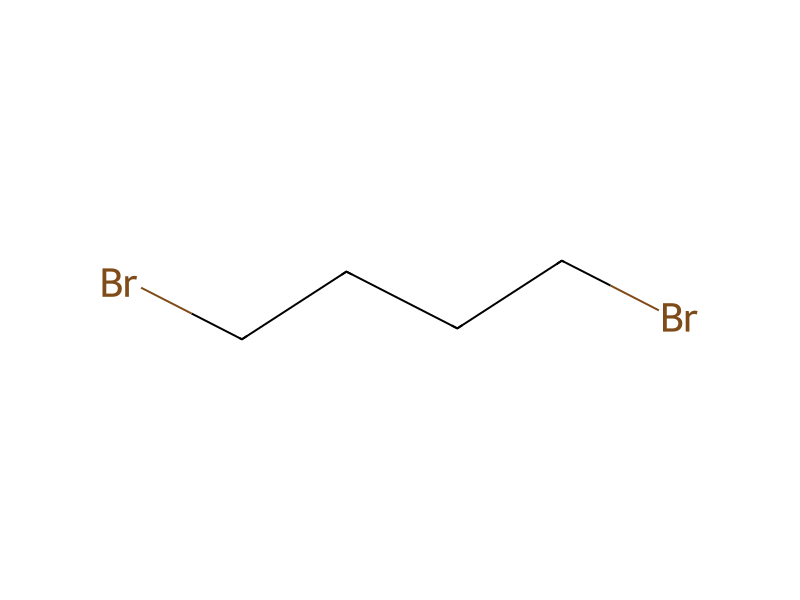






Procedure
To a solution of methyl 3-chloro-4-hydroxyphenylacetate and 1,4-dibromobutane (0.021 g, 0.044 mmol) in 0.5 mL of methanol was added 5N NaOH soln (0.04 mL, 5 eq) at rt. The reaction mixture was heated initially with a heat gun to reflux in order to dissolve the starting material. After heating, the reaction mixture stirred at ambient temperature for 1 h. The reaction mixture was diluted with EtOAc and 0.1N HCl (5 mL). The organic layer was separated from the aqueous portion, and washed with 0.1N HCl (5 mL) followed by 10 mL brine. The organic layer was dried (MgSO4), filtered, and evaporated in vacuo to afford the title compound. This compound was taken forward without further purification.
Workup
- temperatureThe reaction mixture was heated initially with a heat gun
- temperatureto reflux in order
- dissolutionto dissolve the starting material
- temperatureAfter heating
- customThe organic layer was separated from the aqueous portion
- washwashed with 0.1N HCl (5 mL)
- dry with materialThe organic layer was dried (MgSO4)
- filtrationfiltered
- customevaporated in vacuo
Sources & evidence
- ORD record
- ord-64679126521a479a8f532e7a72535a5c
- Source dataset
- uspto-grants-1999_01
- Patent number
- US05859051
Reaction notes
Loading…