Catechol → HCID 86753575, compound
Reaction equation

[C:1]1([C:3](=[CH:5][CH:6]=[CH:7][CH:8]=1)[OH:4])[OH:2].C(O)(=O)C(O)=O.OC[C:17]1[CH:22]=[C:21]([CH3:23])[CH:20]=[C:19](CO)[C:18]=1[OH:26]>O>[CH:17]1[C:18]([OH:26])=[CH:19][CH:20]=[C:21]([CH3:23])[CH:22]=1.[C:1]1([C:3](=[CH:5][CH:6]=[CH:7][CH:8]=1)[OH:4])[OH:2]Participants
Reactant 3

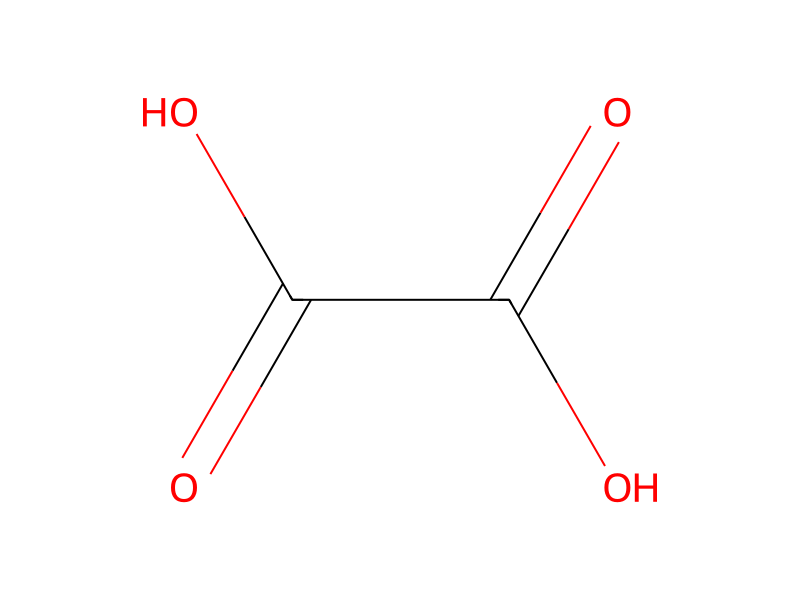
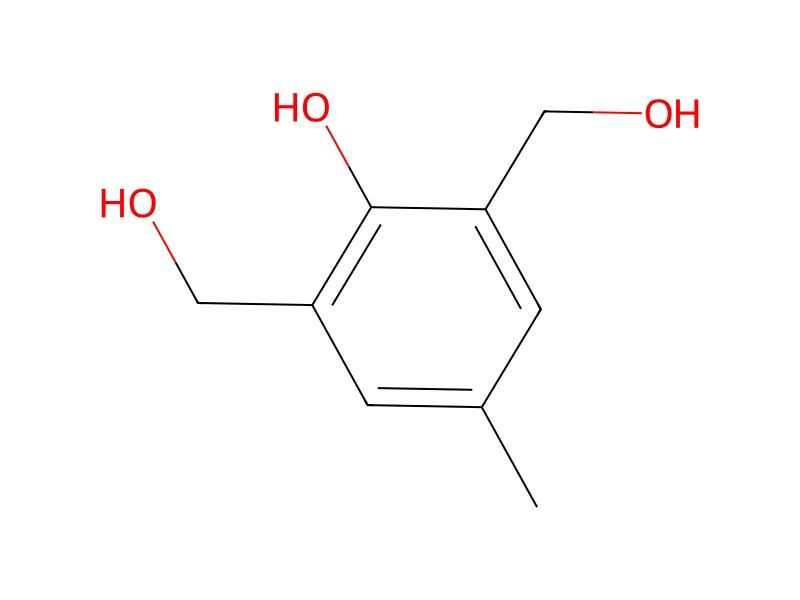
Product 1

Reagents, catalysts & solvents 1

Conditions
- Temperature
- 60 °C
Procedure
To a 1 liter, 3 necked round bottomed flask equipped with a paddle stirrer, condenser, thermometer and heating source, were added 159 g (1.45 moles) of catechol, 10 g (0.11 moles) of oxalic acid and 100 g of water. The mixture was stirred and heated to 60° C. Complete solution was obtained. 147 g (0.874 moles) of 2,6-bis(hydroxymethyl)-4-methylphenol were added, in eight equal portions. After the first portion was added, the temperature dropped several degrees. The temperature of the reaction mixture was raised to 70° C. and four more portions were added at 15 minute intervals. After five portions were added, the temperature of the reaction was raised to 80° C. and the remaining three portions were added at 15 minute intervals. The reaction product phase separated, with the water layer on top. The temperature was then raised to 110° C. and held for 10 minutes. The temperature was then raised to 185° C. and held for 15 minutes. Vacuum was gradually applied and ultimately brought to 30 mm Hg. The reaction mixture was held under these conditions for 30 minutes. The vacuum was broken and the hot product drained into an aluminum dish. After cooling, a dark brown, brittle solid was obtained. 13C NMR shows an average molecular weight of 994 and approximately 5.3%, by weight, of free catechol. Differential scanning calorimetry shows a Tg of 97° C.
Workup
- customTo a 1 liter, 3 necked round bottomed flask equipped with a paddle stirrer, condenser
- temperaturethermometer and heating source
- customComplete solution was obtained
- additionAfter the first portion was added
- additionthe temperature dropped several degrees
- temperatureThe temperature of the reaction mixture was raised to 70° C.
- additionfour more portions were added at 15 minute intervals
- additionAfter five portions were added
- temperaturethe temperature of the reaction was raised to 80° C.
- additionthe remaining three portions were added at 15 minute intervals
- customThe reaction product phase separated, with the water layer on top
- temperatureThe temperature was then raised to 110° C.
- temperatureThe temperature was then raised to 185° C.
- waitheld for 15 minutes
- waitThe reaction mixture was held under these conditions for 30 minutes
- temperatureAfter cooling
- customa dark brown, brittle solid was obtained
Sources & evidence
- ORD record
- ord-54f745adcd8c4cfcbf831b217553d93a
- Source dataset
- uspto-grants-1999_01
- Patent number
- US05859153
Reaction notes
Loading…