Ethyl Acetate → 2-[7-Fluoro-3-(1-tert-butoxycarbonyl-indazol-3-ylmethyl)-2,4-dioxo-5-pyridin-3-yl-2,3,4,5-tetrahydro-benzo[b][1,4]diazepin-1-yl]-N-isopropyl-N-(4-methoxy-phenyl)-acetamide
Reaction equation

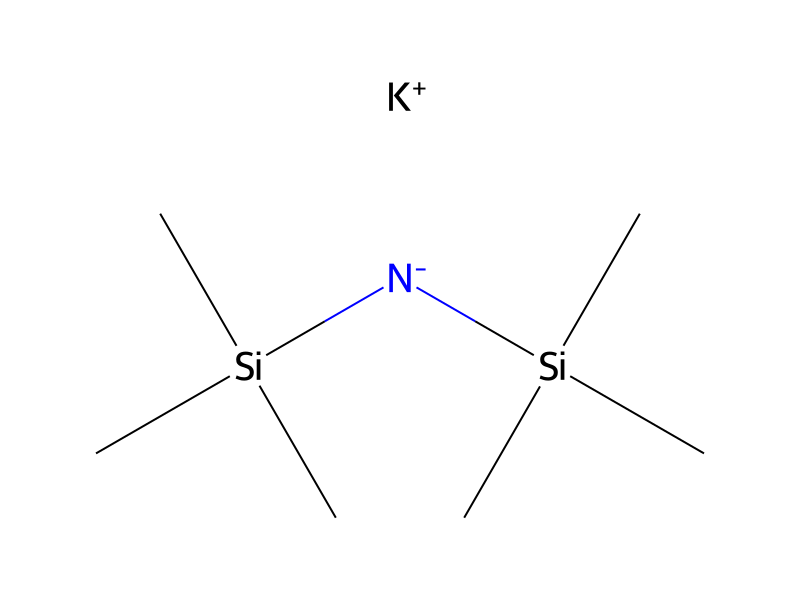
[F:1][C:2]1[CH:35]=[CH:34][C:5]2[N:6]([CH2:19][C:20]([N:22]([CH:31]([CH3:33])[CH3:32])[C:23]3[CH:28]=[CH:27][C:26]([O:29][CH3:30])=[CH:25][CH:24]=3)=[O:21])[C:7](=[O:18])[CH2:8][C:9](=[O:17])[N:10]([C:11]3[CH:12]=[N:13][CH:14]=[CH:15][CH:16]=3)[C:4]=2[CH:3]=1.C[Si]([N-][Si](C)(C)C)(C)C.[K+].Br[CH2:47][C:48]1[C:56]2[C:51](=[CH:52][CH:53]=[CH:54][CH:55]=2)[N:50]([C:57]([O:59][C:60]([CH3:63])([CH3:62])[CH3:61])=[O:58])[N:49]=1.C(OCC)(=O)C>CN(C)C=O.[Cl-].[Na+].O.O>[F:1][C:2]1[CH:35]=[CH:34][C:5]2[N:6]([CH2:19][C:20]([N:22]([CH:31]([CH3:33])[CH3:32])[C:23]3[CH:24]=[CH:25][C:26]([O:29][CH3:30])=[CH:27][CH:28]=3)=[O:21])[C:7](=[O:18])[CH:8]([CH2:47][C:48]3[C:56]4[C:51](=[CH:52][CH:53]=[CH:54][CH:55]=4)[N:50]([C:57]([O:59][C:60]([CH3:63])([CH3:62])[CH3:61])=[O:58])[N:49]=3)[C:9](=[O:17])[N:10]([C:11]3[CH:12]=[N:13][CH:14]=[CH:15][CH:16]=3)[C:4]=2[CH:3]=1Participants
Reactant 4



Product 1

Reagents, catalysts & solvents 3



Procedure
To a solution of 0.400 g of 2-(7-fluoro-2,4-dioxo-5-pyridin-3-yl-2,3,4,5-tetrahydro-benzo[b][1,4]diazepin-1-yl)-N-isopropyl-N-(4-methoxy-phenyl)-acetamide, prepared as in Part E, (0.839 mmol) in 5 mL dimethylformamide at 0° C. under nitrogen is added 2.01 mL (1.01 mmol, 1.2 equiv) potassium bis(trimethylsilyl)amide (0.5M in toluene) dropwise over 5 min. After stirring 10 min., 287 mg of 3-bromomethyl-1-tert-butoxycarbonyl-1H-indazole (0.923 mmol, 1.1 equiv) is added. After 15 min., the reaction is added to a mixture of ethyl acetate, saturated aqueous brine, and water with vigorous agitation. The mixture is transferred to a separatory funnel and the layers were separated. The organic layer is washed with 1:1 water/saturated aqueous brine, saturated aqueous brine, and then dried over anhydrous sodium sulfate, filtered and evaporated in vacuo to a residue. The residue is purified on flash grade silica with 2:3 ethyl acetate/hexane (500 mL) followed by 3:2 ethyl acetate/hexane (1000 mL). The appropriate fractions were combined, evaporated in vacuo to a residue, and triturated with hexane. Hexane is removed in vacuo to provide 388 mg of the title compound as a white solid: 1H NMR (300 MHz, CDCl3) δ8.69 (s, br, 1H), 8.58 (d, 1H, J=4.6), 8.20 (s, br, 1H), 8.02 (d, 1H, J=8.2), 7.84 (d, 1H, J=7.9), 7.57 (s, 1H), 7.50 (m, 1H), 7.32 (m, 2H), 7.14 (d, 2H, J=8.8), 7.05 (m, 1H), 6.97 (m, 2H), 6.61 (dd, 1H, J=2.8, 9.2), 4.92 (m, 1H), 4.52 (d, 1H, J=18.4), 4.40 (dd, 1H, J=5.1, 8.7), 4.04 (d, 1H, J=18.4), 3.85 (s, 3H), 3.81 (m, 1H), 3.53 (dd, 1H, J=5.2, 16.7), 1.66 (s, 9H), 1.03 (m, 6H). TLC Rf =0.50 (ethyl acetate/hexane 7/3).
Workup
- waitAfter 15 min.
- customThe mixture is transferred to a separatory funnel
- customthe layers were separated
- washThe organic layer is washed with 1:1 water/saturated aqueous brine, saturated aqueous brine
- dry with materialdried over anhydrous sodium sulfate
- filtrationfiltered
- customevaporated in vacuo to a residue
- customThe residue is purified on flash grade silica with 2:3 ethyl acetate/hexane (500 mL)
- customevaporated in vacuo to a residue
- customtriturated with hexane
- customHexane is removed in vacuo
Sources & evidence
- ORD record
- ord-5404b6d1096a4cbb962fb7b052f68200
- Source dataset
- uspto-grants-1999_01
- Patent number
- US05859007
Reaction notes
Loading…