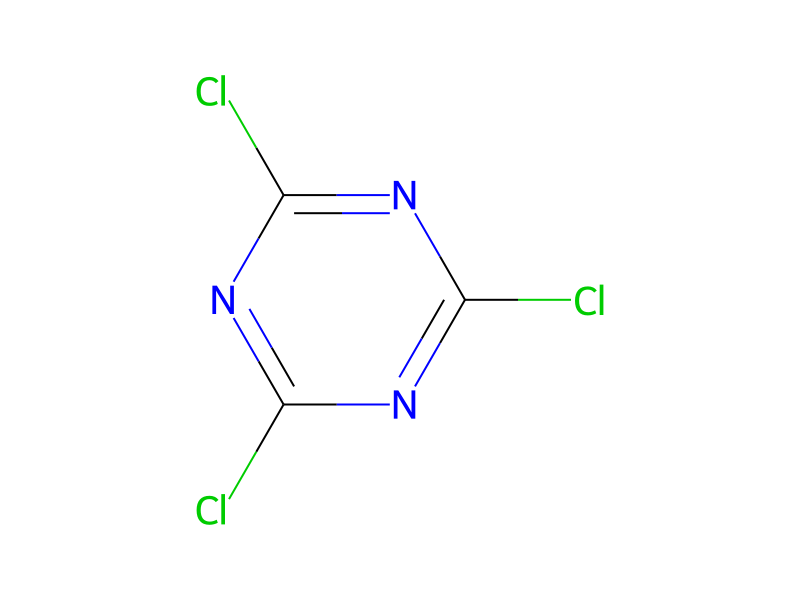
Cyanuric chloride → HCID 19991761, compound
Reaction equation

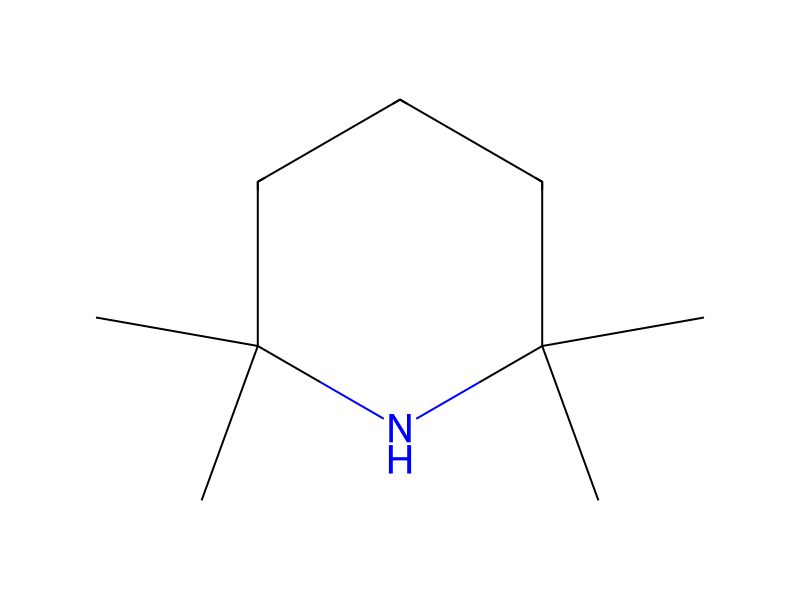
[N:1]1[C:8](Cl)=[N:7][C:5](Cl)=[N:4][C:2]=1[Cl:3].[CH3:10][C:11]1([CH3:19])[CH2:16][CH2:15][CH2:14][C:13]([CH3:18])([CH3:17])[NH:12]1>O>[Cl:3][C:2]1[N:1]=[C:8]([N:12]2[C:13]([CH3:18])([CH3:17])[CH2:14][CH2:15][CH2:16][C:11]2([CH3:19])[CH3:10])[N:7]=[C:5]([N:12]2[C:13]([CH3:18])([CH3:17])[CH2:14][CH2:15][CH2:16][C:11]2([CH3:19])[CH3:10])[N:4]=1Participants
4
Reactant 2
Product 1

Reagents, catalysts & solvents 1

Procedure
18.4 g of cyanuric chloride and 113 g of 2,2,6,6-tetramethylpiperidine are heated for 10 hours at 180° and then for 10 hours at 210° in a 300 ml autoclave. The contents of the autoclave are then taken up in 500 ml of water, and the insoluble residue is filtered off by suction, washed with water and dried. The brownish residue is crystallized from ligroin. 2-Chloro-4,6-bis-(2,2,6,6-tetramethylpiperidin-1-yl)-1,3,5-triazine is obtained as colorless crystals having a melting point of 188°.
Workup
- filtrationthe insoluble residue is filtered off by suction
- washwashed with water
- customdried
- customThe brownish residue is crystallized from ligroin
Sources & evidence
- ORD record
- ord-dbb9c16354334b2a8c81cd34fe0e50c7
- Source dataset
- uspto-grants-1991_10
- Patent number
- US05059689
Reaction notes
Loading…