Hexane → HCID 19991784, compound
Reaction equation

Cl[C:2]1[N:7]=[C:6]([Cl:8])[N:5]=[C:4]([O:9][CH:10]([CH3:12])[CH3:11])[N:3]=1.[CH3:13][C:14]1([CH3:22])[CH2:19][CH2:18][CH2:17][C:16]([CH3:21])([CH3:20])[NH:15]1.CCCCCC>C1(C)C(C)=CC=CC=1>[Cl:8][C:6]1[N:5]=[C:4]([O:9][CH:10]([CH3:12])[CH3:11])[N:3]=[C:2]([N:15]2[C:16]([CH3:21])([CH3:20])[CH2:17][CH2:18][CH2:19][C:14]2([CH3:22])[CH3:13])[N:7]=1Participants
5
Reactant 3

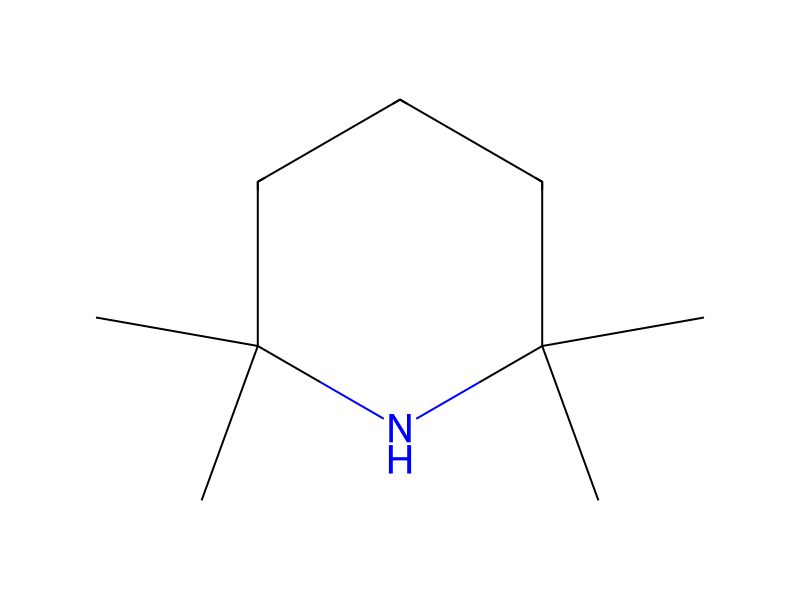

Product 1

Reagents, catalysts & solvents 1

Procedure
104.0 g of 2,4-dichloro-6-isopropyloxy-1,3,5-triazine and 148.3 g of 2,2,6,6-tetramethylpiperidine are reacted in 300 ml of xylene as described in Example 1 and worked up. 2-Chloro-4-isopropyloxy-6-(2,2,6,6-tetramethylpiperidin-1-yl)-1,3,5-triazine is obtained by crystallization from hexane as colorless crystals having a melting point of 111°-112°.
Sources & evidence
- ORD record
- ord-ac4781e42997435c9d3e27515f3f2341
- Source dataset
- uspto-grants-1991_10
- Patent number
- US05059689
Reaction notes
Loading…