Triethylamine → Ammonia
Reaction equation

Cl.Cl[C:3]1[CH:8]=[CH:7][N:6]=[CH:5][CH:4]=1.[NH:9]1[CH2:15][CH2:14][CH2:13][NH:12][CH2:11][CH2:10]1.C(N(CC)CC)C>CC(C)CCO>[NH3:6].[N:6]1[CH:7]=[CH:8][C:3]([N:9]2[CH2:15][CH2:14][CH2:13][NH:12][CH2:11][CH2:10]2)=[CH:4][CH:5]=1Participants
6
Reactant 3


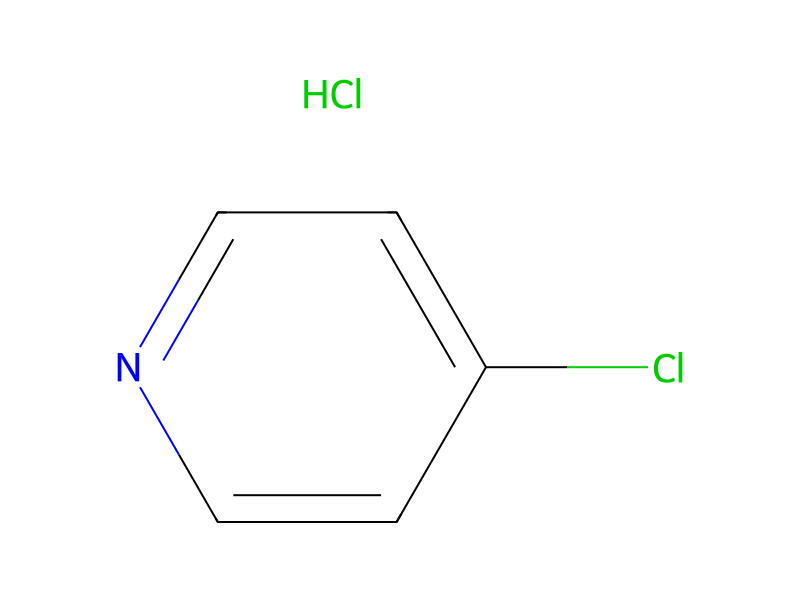
Product 2


Reagents, catalysts & solvents 1

Procedure
A suspension of 4-chloropyridine hydrochloride (7.5 g) in 3-methyl-1-butanol (100 ml) was added dropwise to a refluxing solution of hexahydro-1,4-diazepine (10.0 g) and triethylamine (16.8 ml) in 3-methyl-1-butanol (300 ml). After addition the solution was refluxed for 18 hours. The solvent was removed in vacuo to give an oil. Purification by sinter-column chromatography on silica gel, eluting with dichloromethane containing an increasing proportion of methanol (2-5%) and a small amount of conc. aqueous ammonia, gave 1-(4-pyridyl)hexahydro-1,4-diazepine as a colourless oil which slowly crystallised on standing.
Workup
- additionAfter addition the solution
- temperaturewas refluxed for 18 hours
- customThe solvent was removed in vacuo
- customto give an oil
- customPurification by sinter-column chromatography on silica gel
- washeluting with dichloromethane containing an increasing proportion of methanol (2-5%)
Sources & evidence
- ORD record
- ord-3bbca0678af6482986eed40f4e42c5f6
- Source dataset
- uspto-grants-2007_02
- Patent number
- US07173025B1
Reaction notes
Loading…