Water → 5-Fluoro-1-(4-methoxybenzyl)indoline-2,3-dione
Reaction equation

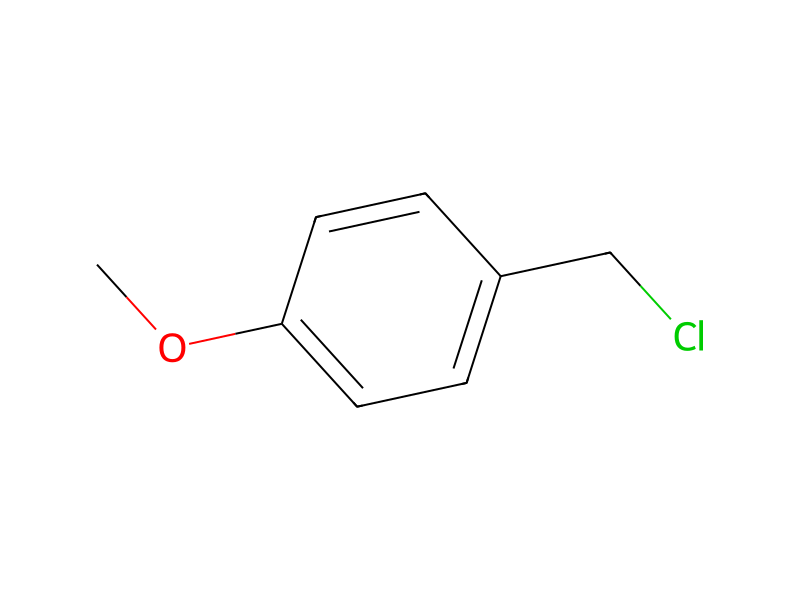
[F:1][C:2]1[CH:3]=[C:4]2[C:8](=[CH:9][CH:10]=1)[NH:7][C:6](=[O:11])[C:5]2=[O:12].[H-].[Na+].[CH3:15][O:16][C:17]1[CH:24]=[CH:23][C:20]([CH2:21]Cl)=[CH:19][CH:18]=1.O>CN(C=O)C.C(OCC)(=O)C.CCCCCC>[F:1][C:2]1[CH:3]=[C:4]2[C:8](=[CH:9][CH:10]=1)[N:7]([CH2:21][C:20]1[CH:23]=[CH:24][C:17]([O:16][CH3:15])=[CH:18][CH:19]=1)[C:6](=[O:11])[C:5]2=[O:12]Participants






Procedure
5-Fluoro-1H-indole-2,3-dione (956 mg, 5.79 mmol, 1 eq) was added as a solution in dry DMF to a stirred slurry of sodium hydride (278 mg, 11.6 mmol, 2 eq) in dry DMF drop wise over 15 minutes under an inert atmosphere with adequate pressure release to accommodate H2 evolution. The resulting mixture was stirred for 1 hour and p-methoxybenzyl chloride was added via syringe to the reaction. The solution was then stirred for 2 hours and worked up by addition of water followed by extraction into ethyl acetate. The organic layer was washed twice with water and then dried over MgSO4. Column chromatography with ethyl acetate/hexane afforded 5-Fluoro-1-(4-methoxy-benzyl)-1H-indole-2,3-dione as a red solid (1.3 g, 80% yield). 1H NMR (CDCl3) δ (ppm): 7.3–7.24 (m, 3H), 7.20 (td, J=8.7, 2.7 Hz, 1H), 6.9–6.86 (m, 2H), 6.76 (dd, J=8.6, 3.6Hz, 1H), 3.81 (s, 2H), 3.78 (s, 3H). LC/MS=286.1 (M+1). Step B: The product from step A (200 mg, 0.701 mmol, 1 eq) was dissolved in 10 mL of dry DCM and placed under and inert atmosphere. DAST (339 mg, 2.103 mmol, 3 eq) was added via syringe and the reaction was stirred overnight. The reaction was worked up by addition of saturated aqueous sodium bicarbonate and the organic layer was dried over MgSO4, filtered, and rotary evaporated to dryness. The resulting crude material was purified by flash chromatography using ethyl acetate/hexane as a solvent system. 1H NMR (CDCl3) δ (ppm): 7.3–7.28 (m, 1H), 7.22 (d, J=8.7 Hz, 2H), 7.09 (td, J=8.7, 1.3 Hz, 1H), 6.87 (d, J=8.7 Hz, 2H), 6.73 (m, 1H), 4.83 (s, 2H), 3.79 (s, 3H). LC/MS=308.1(M+1). Step C: The product from step B (1.178 g, 3.83 mmol, 1 eq) was dissolved in 75 mL of dry THF and placed under an inert atmosphere. LiAlH4 (291 mg, 7.66 mmol, 2 eq) was added as a solid under a positive pressure of N2 at −78° C. The reaction was allowed to stir at this temperature for 30 min and then allowed to warm to room temp over a period of 6 hours. The reaction was worked up by addition of water dropwise followed by 4 equivalents of aqueous KOH. The slurry was diluted with 500 mL of water and extracted with 2×200 mL portions of ethyl acetate. The organic layers were combined, dried over MgSO4, filtered, and rotary evaporated to dryness. The resulting crude material was purified by flash chromatography using ethyl acetate/hexane as a solvent system yielding 320 mg of pure material (28%). 1H NMR (CD3OD) δ (ppm): 7.21 (d, J=8.8 Hz, 2H), 7.06 (dd, J=8.2, 1.3 Hz, 1H), 6.89 (m, 1H), 6.84 (d, J=8.7 Hz, 2H), 6.77 (dd, J=8.6, 4.3 Hz, 1H), 4.83 (s, 2H), 3.73 (s, 3H), 3.12 (s, 2H). LC/MS=294.1(M+1). Step D: The product from step C (50 mg, 0.1704 mmol, 1 eq) was taken up in 1 mL of TFA. The solution was placed in a microwave tube, sealed, and heated to 175° C. for 5 minutes. The resulting black solution was neutralized with saturated sodium bicarbonate and extracted with 2×50 mL portions of ethyl acetate. The organic layers were dried over MgSO4, filtered, and rotary evaporated to dryness. The resulting solid was dissolved in a 50:50 mix of DMSO/MeOH and purified by prep HPLC. Yield 23.8 mg of white solid (81%). 1H NMR (DMSO D6) δ (ppm): 10.41 (s, 1H), 7.13 (dd, J=8.6, 2.4 Hz, 1H), 7.01 (td, J=8.6, 2.7 Hz, 1H), 6.8 (dd, J=8.5, 4.5 Hz, 1H), 3.5 (s, 2H).
Workup
- stirringThe solution was then stirred for 2 hours
- extractionfollowed by extraction into ethyl acetate
- washThe organic layer was washed twice with water
- dry with materialdried over MgSO4
Sources & evidence
- ORD record
- ord-342daa02ea4144cd9898f08ef04aa09a
- Source dataset
- uspto-grants-2007_02
- Patent number
- US07173051B2
Reaction notes
Loading…