2-Chloro-3,5-dinitropyridine → HCID 21082859, compound
Reaction equation

Cl[C:2]1[C:7]([N+:8]([O-:10])=[O:9])=[CH:6][C:5]([N+:11]([O-:13])=[O:12])=[CH:4][N:3]=1.[CH2:14]([N:16]1[CH2:21][CH2:20][NH:19][CH2:18][CH2:17]1)[CH3:15]>C1COCC1>[CH2:14]([N:16]1[CH2:21][CH2:20][N:19]([C:2]2[C:7]([N+:8]([O-:10])=[O:9])=[CH:6][C:5]([N+:11]([O-:13])=[O:12])=[CH:4][N:3]=2)[CH2:18][CH2:17]1)[CH3:15]Participants
4
Reactant 2

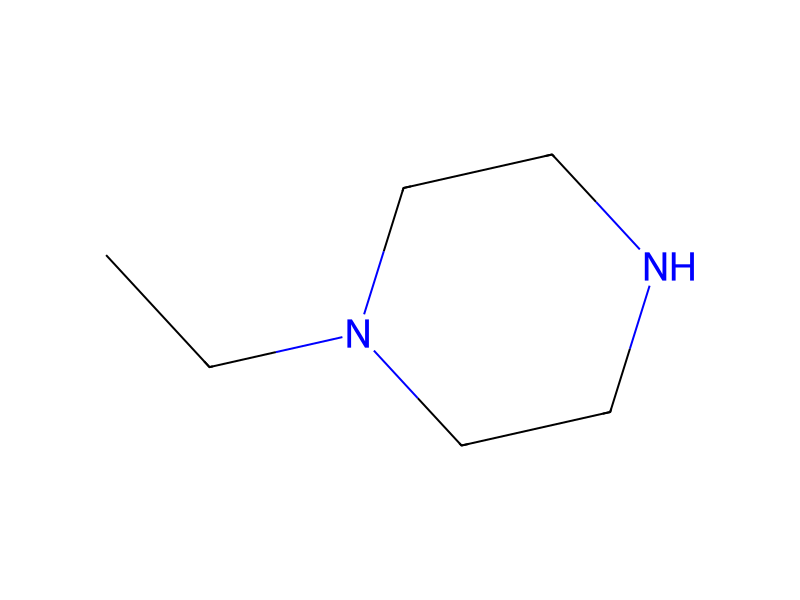
Product 1

Reagents, catalysts & solvents 1

Conditions
- Temperature
- 60 °C
Procedure
3 g (14.7 mmol) of 2-chloro-3,5-dinitropyridine, 20 ml of THF and 30 mmol of 4-ethylpiperazine were placed in a round-bottomed flask. The mixture was maintained at 60° C. for two hours with stirring and was then poured into a mixture of ice-water with stirring. The precipitate formed was filtered off by suction and dried under vacuum to constant weight. 5 g of yellow powder were obtained.
Workup
- stirringwith stirring
- customThe precipitate formed
- filtrationwas filtered off by suction
- customdried under vacuum to constant weight
Sources & evidence
- ORD record
- ord-fb9c77676d274d95a1ef089459854c46
- Source dataset
- uspto-grants-2007_02
- Patent number
- US07175670B2
Reaction notes
Loading…