Triethylamine → 2-(4-ethoxycarbonyl-1-piperidinyl)-4-nitropyridine N-oxide
Reaction equation

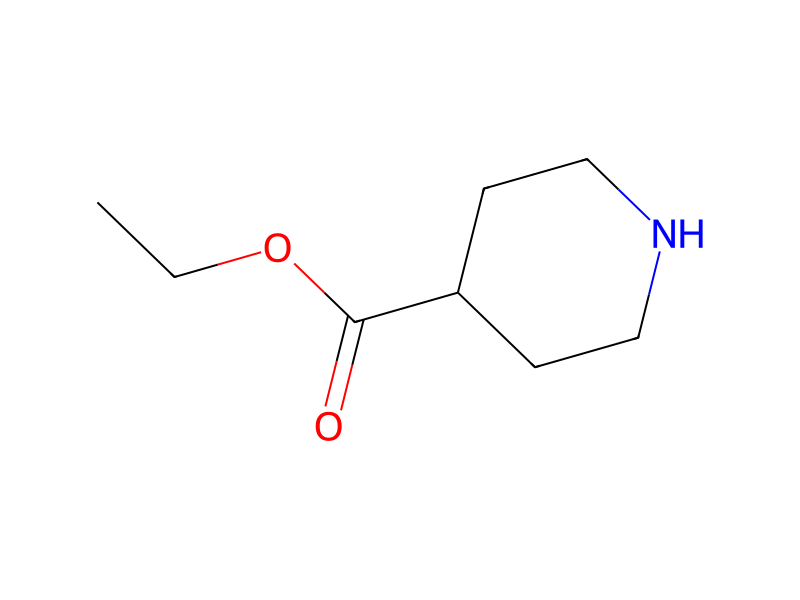
Br[C:2]1[CH:7]=[C:6]([N+:8]([O-:10])=[O:9])[CH:5]=[CH:4][N+:3]=1[O-:11].[CH2:12]([O:14][C:15]([CH:17]1[CH2:22][CH2:21][NH:20][CH2:19][CH2:18]1)=[O:16])[CH3:13].C(N(CC)CC)C>C(O)C>[CH2:12]([O:14][C:15]([CH:17]1[CH2:22][CH2:21][N:20]([C:2]2[CH:7]=[C:6]([N+:8]([O-:10])=[O:9])[CH:5]=[CH:4][N+:3]=2[O-:11])[CH2:19][CH2:18]1)=[O:16])[CH3:13]Participants
5




Conditions
- Temperature
- 80 °C
Procedure
To a solution of 2-bromo-4-nitropyridine N-oxide (12 g), which is prepared according to the method disclosed in J. Org. Chem., 21, 1077 (1956), in ethanol (300 ml) are added 4-piperidinecarboxylic acid ethyl ester (22 g) and triethylamine (11.6 ml), and the mixture is stirred at 80° C. for 5 hours. The reaction solution is concentrated under reduced pressure, and the residue is dissolved in ethyl acetate, washed with water, and the solvent is evaporated under reduced pressure to give the title compound (18 g).
Workup
- concentrationThe reaction solution is concentrated under reduced pressure
- dissolutionthe residue is dissolved in ethyl acetate
- washwashed with water
- customthe solvent is evaporated under reduced pressure
Sources & evidence
- ORD record
- ord-b2122ce626dd47209bab860b2c95742e
- Source dataset
- uspto-grants-2007_02
- Patent number
- US07176199B2
Reaction notes
Loading…