Triethylamine → Methyl 2-(dipropylamino)-6-methylpyrimidine-4-carboxylate
Reaction equation

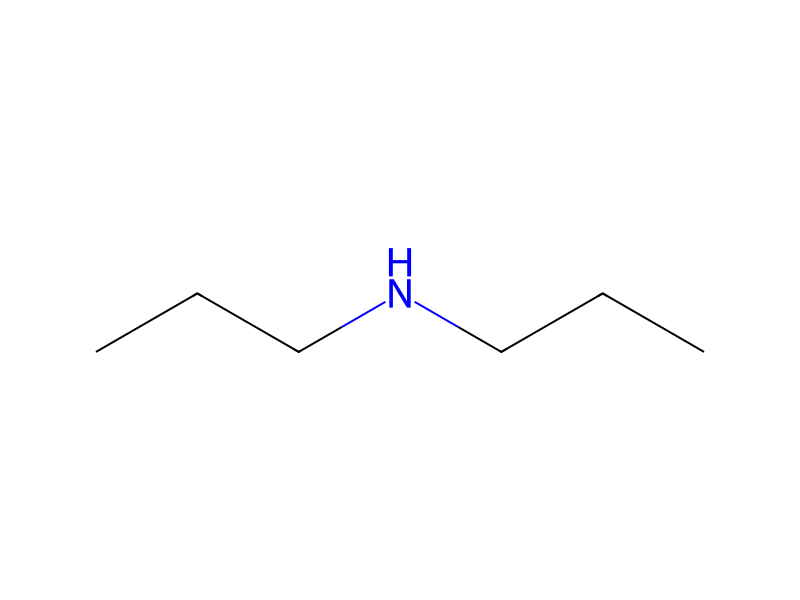
Cl[C:2]1[N:7]=[C:6]([C:8]([O:10][CH3:11])=[O:9])[CH:5]=[C:4]([CH3:12])[N:3]=1.[CH2:13]([NH:16][CH2:17][CH2:18][CH3:19])[CH2:14][CH3:15].C(N(CC)CC)C>C1COCC1>[CH2:13]([N:16]([CH2:17][CH2:18][CH3:19])[C:2]1[N:7]=[C:6]([C:8]([O:10][CH3:11])=[O:9])[CH:5]=[C:4]([CH3:12])[N:3]=1)[CH2:14][CH3:15]Participants
5




Procedure
A mixture of methyl 2-chloro-6-methylpyrimidine-4-carboxylate (0.411 g, 2.20 mmol), di-n-propylamine (0.668 g, 6.60 mmol), triethylamine (0.267 g, 2.64 mmol), and THF (5 ml) was stirred at room temperature for 55 min and then at reflux for 1.3 h, at which time is was cooled and partitioned between ethyl acetate and a mixture of brine and aq. sodium bicarbonate. The organic layer was dried over magnesium sulfate and concentrated and then chromatographed on silica gel using ethyl acetate-hexane (90/10) to give methyl 2-(dipropylamino)-6-methylpyrimidine-4-carboxylate (0.457 g) as a pale yellow liquid.
Workup
- temperatureat reflux for 1.3 h, at which time
- temperatureis was cooled
- custompartitioned between ethyl acetate
- additiona mixture of brine and aq. sodium bicarbonate
- dry with materialThe organic layer was dried over magnesium sulfate
- concentrationconcentrated
- customchromatographed on silica gel
Sources & evidence
- ORD record
- ord-9d631dea45b54e34b64bd668616bdd5c
- Source dataset
- uspto-grants-2007_02
- Patent number
- US07176242B2
Reaction notes
Loading…